Push Cart or Carry Bag: Which Is Better for New Golfers?
Push cart vs carry bag for beginner golfers: cost, fatigue over 18 holes, storage, course rules, and a simple framework to decide.
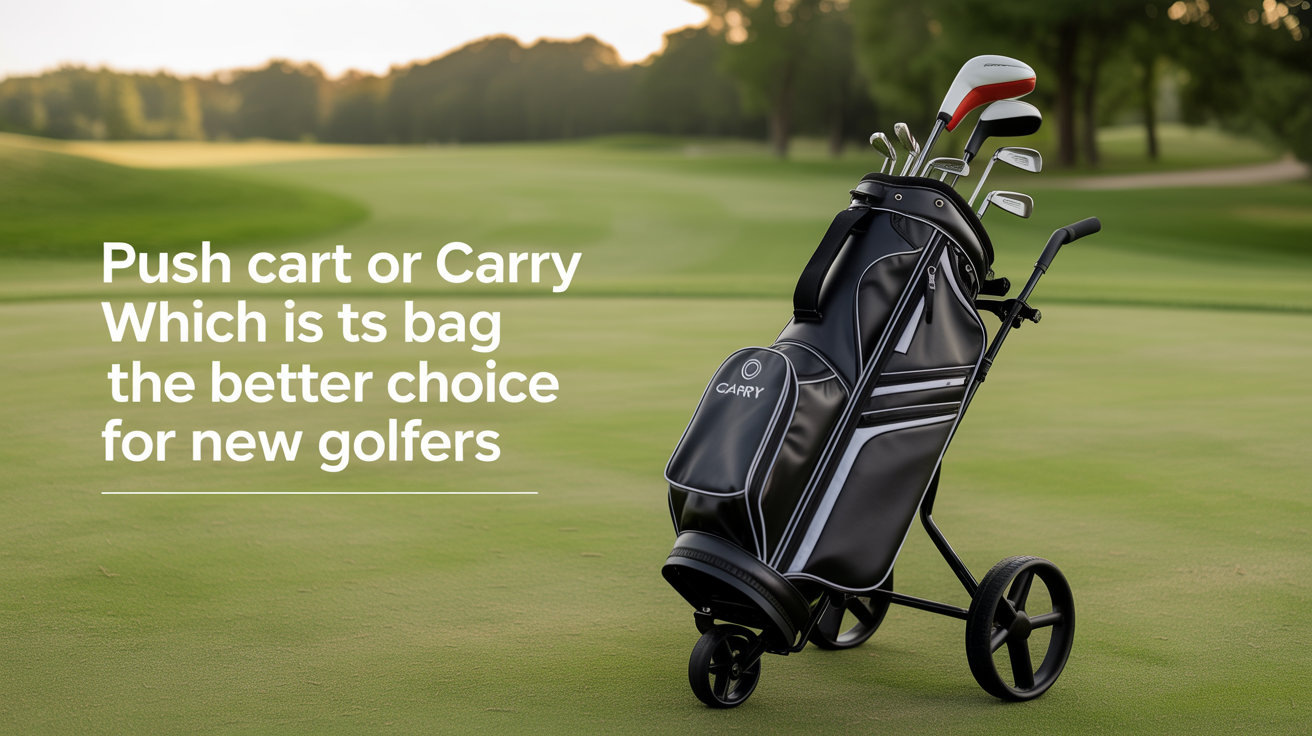
If you're walking a course instead of riding in a cart, you've got two real ways to move your clubs: sling a lightweight carry bag over your shoulder, or roll everything on a push cart (sometimes called a pull cart, depending on whether you push it or tow it). The push cart vs carry bag question feels bigger than it is when you're new to the game, mostly because both options come in a dozen price points and styles. The decision really comes down to a few practical factors: how much weight you're comfortable carrying, how often you actually play, and what you're willing to spend.
Carrying Your Bag: The Simple, Cheap Option
A carry bag (also called a stand bag, because of the small folding legs that pop out when you set it down) is built to be light. Beginner-friendly stand bags typically run in the low hundreds of dollars, and plenty of decent ones sell for less than that. There's nothing to charge, nothing to fold and unfold at the cart corral, and nothing extra to store in your garage. You just pick it up and go.
The tradeoff is physical. Eighteen holes on foot is somewhere between four and six miles depending on the course layout, and a fully loaded bag with 14 clubs, balls, tees, rain gear, and a water bottle has real weight on your shoulder the whole way. For a fit player who walks regularly, that's not a big deal. For someone who spends most of the week at a desk, or deals with shoulder, neck, or lower back issues, that weight adds up over the back nine. Fatigue changes your tempo, and a tired back changes your posture at address, a quiet way a carry bag can cost you strokes late in a round.
Storage is the other limitation. A stand bag has enough pockets for balls, tees, a glove, and a rain jacket, but it won't swallow a cooler, a second layer, and a full rain suit the way a cart bag can. If you travel light, this isn't an issue. If you pack for four seasons of weather in one round, you'll notice the difference.
Push Carts and Pull Carts: How They Work
A manual push (or pull) cart carries a larger cart bag on a two- or three-wheel frame that you steer by hand. It takes the weight off your body entirely, which is the whole appeal. You're still walking the same distance, but you're not carrying anything heavier than the push handle itself.
Manual carts range widely in price, from budget folding models to sturdier aluminum ones that fold down small enough to fit in a trunk. Because you're not limited by shoulder weight, you can use a full-size cart bag with more pockets, room for a second glove, extra layers, snacks, and a bigger water bottle. That capacity helps if you play in variable weather or like to be over-prepared as a beginner, a reasonable instinct while you're still figuring out what you actually need in your bag.
The downside is bulk. A folded cart still takes up trunk space, needs loading and unloading at the course, and is one more thing that can have a mechanical hiccup, like a wheel that won't lock. None of that is common, but it's a small added layer of gear management a carry bag doesn't have.
Electric Push Carts: Worth the Extra Cost?
Electric (or "remote" or "GPS") push carts drive themselves, either at a set speed you control with a dial, by remote control, or by following you via a sensor. They solve the walking-and-pushing problem entirely, which matters if you have a physical condition that makes even light pushing uncomfortable, or if you just want to enjoy the round without thinking about equipment at all.
They cost meaningfully more than manual carts, often several times the price, and they're heavier and bulkier to transport and charge before each round. For an occasional beginner, that's usually overkill relative to the benefit. For someone who walks several rounds a week, especially in hilly terrain, the extra cost can be easy to justify over time. It's a purchase worth making once you know you'll use it often, not a starter-kit item.
Push Cart vs Carry Bag: Cost and Effort Comparison
| Factor | Carry / Stand Bag | Manual Push Cart | Electric Push Cart |
|---|---|---|---|
| Typical upfront cost | Low | Low to moderate | High |
| Physical effort over 18 holes | Highest (shoulder load) | Low (walking only) | Lowest (little to no pushing) |
| Storage capacity | Limited | Generous | Generous |
| Transport and storage at home | Easiest | Needs trunk space, folds down | Bulkiest, needs charging |
| Best for | Occasional players, minimalists | Regular walkers, most beginners | Frequent walkers or physical limitations |
| Course restrictions | Rarely an issue | Sometimes restricted | Sometimes restricted |
Course Rules Sometimes Restrict Carts
This is a detail beginners often miss. Some courses, especially older or narrower ones, restrict push carts on certain holes or around greens and tees to protect turf, particularly during wet stretches. A handful of clubs limit carts on busy weekend mornings to keep pace of play moving, or require them to stay on cart paths near sensitive areas. None of this is universal, and most public courses that cater to walkers are fine with push carts, but it's worth a quick check with the pro shop before you assume your cart is welcome everywhere. A carry bag never runs into this problem, since nothing is rolling across the turf.
How Often You Play Should Drive the Decision
Here's a simple way to think about it instead of agonizing over spec sheets.
You play once or twice a month, or you're not sure golf is going to stick yet. Rent. Most courses have loaner push carts for a small daily fee, and some will let you use a house carry bag if you're there for lessons or a casual round. There's no reason to buy anything before you know your own habits, and the same logic applies to how much it actually costs to get started in golf. Spend on lessons and balls first.
You play most weekends and you're comfortable carrying weight. A carry bag is fine, and it's the simplest option to own. Pair it with a decent pair of golf shoes built for walking comfort and you're set for most of the season.
You play most weekends but your back, shoulders, or knees complain after a walked round. Get a manual push cart. It's the single easiest way to make eighteen holes feel like far less work, and the cost difference versus a good carry bag isn't dramatic.
You walk multiple rounds a week, live somewhere hilly, or have a physical limitation that makes even light pushing tiring. An electric cart earns its price at that usage level.
Budget matters too, obviously, but it tends to sort itself out once you know how often you'll actually use the thing. A cart you use every week justifies a higher price per round than one that sits in the garage from October to April.
You Don't Need to Buy Either Right Away
New golfers often feel pressure to arrive fully equipped, but you don't need to own a cart or even a proper stand bag for your first several rounds. Nearly every public course rents push carts by the round for a modest fee, and many will rent a full bag setup if you're still borrowing or renting clubs too. Use those first months to notice what actually bothers you: the shoulder weight, the bulk of a cart in your trunk, or nothing at all. That answer is worth more than any spec comparison, and it costs nothing but a few rental fees. Once you've settled into a routine, check what to actually pack for a round so your cart or bag choice lines up with everything else you're carrying.
Frequently Asked Questions
Is a push cart faster than carrying a bag?
Not inherently, since you cover the same distance either way. A cart can slow you down slightly while you fumble with the fold-out frame at the first tee. It tends to speed you up late in the round, when a tired player carrying a bag slows their pace more than a rested one pushing a cart.
Can I use a push cart for a 9-hole round instead of an 18-hole round?
Yes, and a lot of beginners start there. Nine holes with a push cart is an easy way to test whether you like using one before committing to a longer round or a purchase.
Do I need a special bag for a push cart, or will any carry bag work?
A stand bag will strap onto most push carts fine, but a dedicated cart bag usually has more pockets, a flatter bottom that sits more securely on the frame, and no legs you don't need anymore. If you already own a stand bag, there's no rush to replace it just for cart use.
Are push carts allowed at every golf course?
Most public and semi-private courses allow them, but some restrict them on certain holes, near greens, or during wet conditions to protect the turf. A quick call to the pro shop before your round avoids any surprise.
What if I have no strong preference either way?
Rent a push cart a few times and carry your bag a few times, ideally on the same course so the comparison is fair. Most beginners land on a clear preference within a handful of rounds, and that firsthand feel is more reliable than any general recommendation.