Playing Golf in the Rain: What Beginners Need to Know
Rain changes grip, footing, and club selection. Learn the wet-weather gear, swing adjustments, and casual water rules every beginner needs.
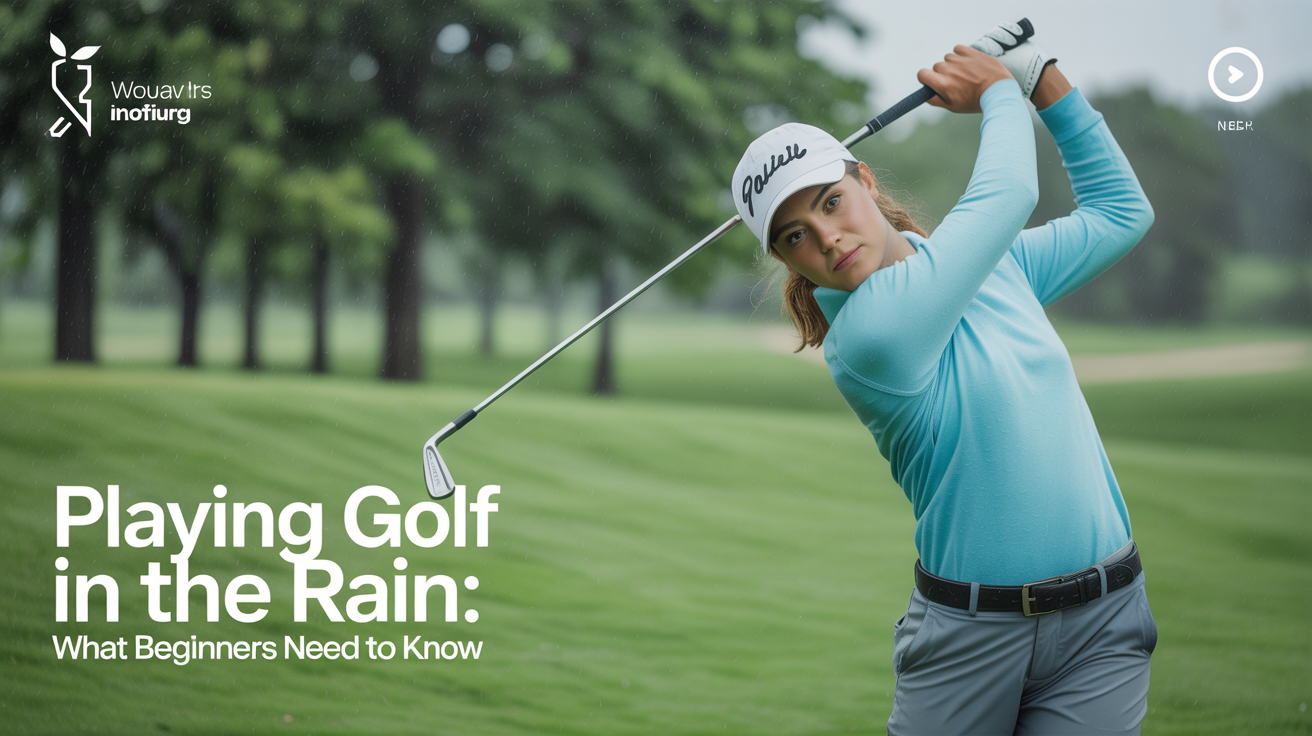
Rain is part of golf. Courses stay open through drizzle, showers, and steady downpours, and most rounds that start dry finish wet. The good news: a little preparation goes a long way. Once you know what gear actually helps, how to adjust your contact in wet conditions, and what the rules say about standing water on the course, you can walk off feeling like you handled it rather than got beaten by it.
One rule before anything else: if you see lightning or hear thunder, stop play immediately and get to a hard-roofed shelter. No round of golf is worth the risk. Most courses have a horn system to signal a lightning suspension. Learn what those horn blasts mean before you tee off.
The Gear That Actually Matters in the Rain
You do not need a full waterproof wardrobe to play comfortably in wet weather. A few specific items make the biggest difference.
Rain gloves. Standard golf gloves get slippery when wet. Rain gloves are made from a tackier synthetic material that grips better as moisture increases. Many golfers actually feel more confident holding the club after a rain glove gets damp. Buy a pair before you need them. Carry a spare in a small zip-lock bag so you always have a dry set to rotate in.
A rain jacket. Look for something lightweight and waterproof rather than water-resistant. Water-resistant shells bead water at first but soak through. A proper rain jacket with taped seams keeps your base layer dry, which keeps your arms moving freely. Bulky jackets restrict your swing, so try one on and take a few practice swings before committing.
Waterproof or water-resistant shoes. Wet grass gets slippery fast. A shoe with good traction keeps your footing stable through the swing, which matters more in rain than on a dry day when you can dig in naturally. For a look at what to prioritize when buying shoes, see Golf Shoes, Gloves, and Apparel: What You Really Need.
A waterproof bag or bag cover. Your clubs can handle getting wet, but your extra gloves, your scorecard, and anything else in the pockets cannot. Most cart and carry bags come with a hood. If yours did not, a simple bag cover costs very little and keeps everything dry.
Dry towels. Bring two. Keep one clipped to the bag; the other lives under your umbrella or inside the bag pocket. Dry your grips and the club face before each shot. A wet face reduces spin and makes distance harder to predict.
How Wet Conditions Change Your Swing and Club Selection
The adjustments in rain are mostly about control, not power. You are not trying to hit it farther. You are trying to make clean contact on a day when conditions fight against you.
Grip pressure and technique. Dry your grip and your glove before each shot. Hold the club firmly but not in a death grip. Tight hands restrict wrist movement and tend to cause the sort of off-center contact that wet lies already make more likely. If your hands feel slippery even with a rain glove, wipe the grip again and re-grip before you swing.
Expect the ball to fly shorter. Wet air is denser than dry air in terms of the way it affects the ball's behavior on soft fairways. More importantly, wet fairways kill roll. A shot that normally runs ten yards after landing may stop almost dead. Take one more club than you normally would for a given distance, especially on approach shots to soft greens.
Adjust for wet lies. Grass holds more water between the blade and the ball in the rough, reducing the spin your club face would normally generate. Shots from wet rough tend to come out lower and run more than expected. From the fairway, water between the club and ball produces what is sometimes called a flier: the ball comes out with less backspin and can travel farther than normal. Neither outcome is drastic, but knowing to expect it helps you plan.
Shorten your swing slightly. A compact, controlled swing is easier to repeat when footing is uncertain and your jacket is restricting your shoulders. You give up a little distance, but you make more consistent contact.
Understanding Casual Water and Relief
Casual water is temporary water that is visible before or after you take your stance. It is not a water hazard. It is simply water that has collected on the course from rain and has not drained away yet.
The rules give you free relief from casual water. You are entitled to drop within one club-length of the nearest point of complete relief, no closer to the hole, with no penalty stroke. That means if your ball sits in a puddle or you cannot take your stance without standing in standing water, you get out without losing a stroke.
Here is how to take the relief correctly: find the nearest point where you can swing, stand, and address the ball without any part of that process touching the casual water. Drop the ball from knee height within one club-length of that spot. You do not get to move closer to the hole, and you must drop in the same general area of the course (rough to rough, fairway to fairway).
The rules also apply on the putting green. If casual water stands between your ball and the hole, you can move the ball to the nearest point of relief on the green, still no closer to the hole.
For a fuller overview of the rules you will use most, The Basic Rules of Golf You Need on Day One covers free drops, penalty areas, and other common situations in plain language.
Pace of Play and Practicalities
Rain rounds tend to run slower because players are fussing with umbrellas, drying gloves, and waiting for playing partners. Keep your own pace crisp by doing prep work while others are hitting. Dry your grip during their shot, not after you get to the ball. Have the next club in mind before you arrive.
If the course is soft enough that cart paths are closed or walking paths are restricted, the club may have a "lift, clean, and place" local rule in effect. This means you can pick up your ball, clean it, and set it back down within a defined area without penalty. Check with the pro shop when you arrive on a wet day.
For a full rundown of what to pack before any round, including what extra layers and accessories to keep in the bag, see What to Bring to a Round of Golf: A Beginner's Checklist.
Frequently Asked Questions
Can I play golf in the rain without special gear? You can, but it is harder than it needs to be. The minimum worth having is a pair of rain gloves and a dry towel. Without them, grip becomes genuinely unreliable, and wet grips are one of the more common causes of poor shots in wet weather. A rain jacket helps too, but a dry upper body is a comfort issue more than a performance one.
Should I take more club in the rain? Generally yes. Wet fairways kill roll after the ball lands, which reduces total distance even if the ball travels roughly the same through the air. On approach shots to green, adding one club is a reasonable default. Adjust based on how soft the course is playing.
What do I do if I hear thunder during my round? Stop immediately. Get away from open areas and seek a hard-roofed building or a hard-top vehicle. Do not shelter under trees. Most courses use a horn signal for lightning suspension. Wait for the all-clear signal before returning to the course. This is not optional.
Is there a penalty for playing out of casual water? No. Casual water is a no-penalty situation. You are entitled to free relief from it. The only case where you would take a penalty is if you choose to play the ball as it lies from casual water, which is also allowed, or if the drop is not taken correctly.
Do rain conditions affect putting? Yes. Wet greens are slower than dry ones. The ball rolls less, so you will need to hit putts with a bit more pace. Be careful not to dramatically overshoot on downhill putts where the green's speed feels unpredictable. Reading the break is also harder when the surface is wet, so aim to keep the ball on your intended line and let speed adjust.
The Fairway Primer is an independent resource and is not affiliated with any golf brand, course, instructor, or governing body. For personalized instruction, consult a PGA professional.