The Basic Rules of Golf You Need on Day One
Learn the basic rules of golf before your first round: counting strokes, out of bounds, lost balls, pace of play, and more, explained simply.
You don't need the rulebook to play your first round
The official Rules of Golf runs to hundreds of pages. Nobody expects you to memorize it. What you do need are the handful of situations that come up on every single hole: how to count your strokes, what to do when the ball goes somewhere bad, and how to keep things moving so you don't hold up the group behind you.
That's what this guide covers. The rules here are simplified for beginners. The full, official versions (published by the USGA and the R&A) have more detail and some nuance that won't matter much on your first few rounds. Once you're comfortable, you can layer in the finer points.
How to count strokes
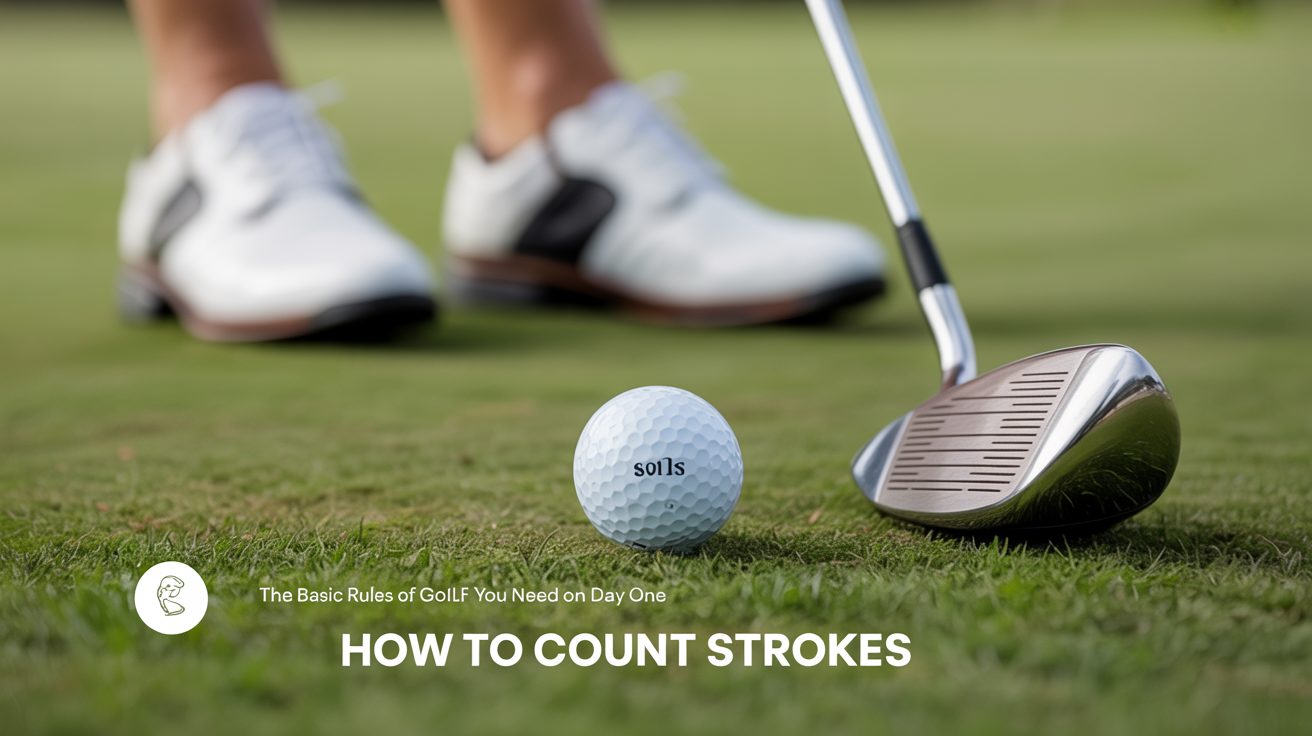
Every time you swing at the ball and intend to hit it, that's a stroke. Count one for each swing, regardless of where the ball ends up. Miss the ball completely? That still counts as a stroke if you were trying to hit it. A practice swipe where you deliberately stop before contact doesn't count.
At the end of each hole, your score is the total number of strokes it took to get the ball in the cup.
Par and what it means for you
Each hole has a "par," which is the number of strokes a skilled golfer is expected to take. Par 3, par 4, and par 5 are the most common. If the hole is a par 4 and you finish in 6 strokes, you scored two over par, sometimes called a "double bogey."
As a beginner, forget par entirely for a while. Count your strokes honestly and focus on improvement round over round. That's it.
For a deeper look at scoring and what a handicap means once you're a regular, see how to keep score in golf and what a handicap is.
Tee box rules
Every hole starts from the tee box, which has two markers (usually colored blocks or plates). You must tee your ball between those markers and no more than two club-lengths behind them. You can stand outside that zone, but the ball has to be in it.
Tee the ball in the air on a wooden or plastic tee for your first shot on each hole. After that, you play it as it lies on the ground. No tee until the next hole.
A quick safety note: always wait until the group ahead has moved well out of range before you swing on the tee. A golf ball travels farther and faster than most beginners expect.
Out of bounds, lost balls, and penalty drops
This is where a lot of beginners freeze up, and honestly, it's the part of simple golf rules that trips up experienced players too. Here's the plain version.
Out of bounds
White stakes or white lines mark the boundary of the course. If your ball crosses that boundary, it's out of bounds. The penalty is stroke-and-distance: you add one penalty stroke to your count, then play again from where you originally hit the shot.
In practice, this means if you hit your tee shot out of bounds, you're now hitting your third shot from the tee (original stroke + penalty stroke + new shot).
Lost ball
If you can't find your ball within three minutes of searching, it's officially lost. Same rule applies: stroke-and-distance. You go back to where you last played from, add a penalty stroke, and hit again.
Since going all the way back can slow things down, many recreational golfers use a "local rule" (sometimes called a drop near where the ball was lost, with a two-stroke penalty). Ask the course or your playing partners if they use this before your round. It's very common in casual play, just not in official competition.
Penalty drops in general
When you're allowed to drop (for a hazard, an unplayable lie, etc.), you'll hear "one-stroke penalty" or "two-stroke penalty" depending on the situation. The drop itself means picking up your ball and dropping it from knee height in a specific area. Your playing partners or a course ranger can walk you through the exact procedure the first time it comes up.
Play it as it lies
One of the core ideas in golf is that you play the ball from wherever it ends up. Sitting in a divot? Play it. Buried in a bunker? Play it. That's golf.
There are exceptions built into the rules (casual water, ground under repair, immovable obstructions), but for day one, the main principle is: don't move the ball to improve your situation unless you know the rules allow it. Moving a ball without a valid reason costs you a penalty stroke.
You are allowed to mark and lift your ball on the putting green to clean it or to move it out of another player's line. Everywhere else, leave it where it lands unless a specific rule says otherwise.
Order of play
On the tee box for the first hole, the group decides who goes first. Flip a tee, draw a card, whatever works. After that, the order is simple:
- On the tee: whoever scored lowest on the previous hole tees off first (this is called having "the honor").
- During the hole: whoever's ball is farthest from the hole plays first.
That said, many groups play "ready golf" — you hit when you're ready rather than waiting for strict order. It speeds things up and is perfectly fine for casual rounds. Just make sure nobody is in the path of your swing or in your landing area before you pull the trigger.
Picking up your ball to keep pace
Here's something the rulebook won't tell you directly: it's completely acceptable as a beginner to pick up your ball once you've taken a lot of strokes on a hole. If you're on 10 shots on a par 4 and still chipping around, pick up and move on. You can record a "max score" for the hole (some people use double par as a cap) and carry on.
Nobody on a casual round expects you to hole every shot. Holding up the pace of play causes more frustration than carding a bad score, so keeping things moving is genuinely the polite thing to do. You'll find more on this in how to keep up the pace of play.
A quick-reference table: common situations
| Situation | What to do | Penalty strokes |
|---|---|---|
| Ball out of bounds (white stakes) | Return to where you last hit, re-hit | +1 |
| Ball lost (not found in 3 min) | Return to where you last hit, re-hit | +1 |
| Ball in a water hazard (yellow/red stakes) | Drop in the relief area and continue | +1 |
| Unplayable lie (your call) | Drop within two club-lengths, no closer to hole | +1 |
| Ball moved accidentally on the green | Replace it, no penalty (most situations) | 0 |
| Whiffed a shot (intended swing, missed) | Count it and try again; it already counts | 0 extra |
This table is simplified. The exact drop zones and procedures have additional detail in the official rules.
Before and between holes: a few more basics
Golf involves swinging clubs and walking several miles outdoors. Warm up before your round, even if it's just a few minutes of easy swings and stretching. Be aware of where other people are standing when you swing — always confirm no one is nearby before you take a full cut.
Read the posted local rules on the scorecard before you tee off. Every course has small variations, including preferred lies, specific out-of-bounds areas, and environmentally sensitive zones, and knowing them ahead of time saves a lot of confusion mid-round.
If you're unsure what to do in any situation, ask your playing partners or a course ranger. People genuinely enjoy helping newcomers figure things out. Understanding golf etiquette alongside the basic rules will make you a playing partner people actually want to invite back.
Frequently asked questions
Can I tee my ball up anywhere on the fairway?
No. You can only use a tee on the tee box, for the first shot of each hole. After that, the ball plays as it lies on the ground. It's one of the more common mix-ups in the first few rounds.
What happens if I accidentally move my ball?
On the putting green, if you accidentally move your ball (say, your putter clips it while you're lining up), you replace it with no penalty in most situations. Off the green, accidentally moving your ball generally results in a one-stroke penalty and you must replace it. If in doubt, replace the ball and ask your playing partners. Better to over-correct than play from the wrong spot.
Do I have to count every stroke if I'm a complete beginner?
Technically, yes. Honest counting is part of the game. In practice, most beginners play "max score" on a hole (pick up once you reach double par or a set number) to keep pace. Track your strokes as best you can, pick up when a hole gets out of hand, and don't stress about posting a formal score until you're ready.
What does "stroke and distance" actually mean?
It means two things happen when you take the penalty: you add a stroke to your count (the penalty), and you go back to the original spot to hit again (the distance part). So you're penalized both in score and in position on the course. It's the most common penalty situation in golf rules for beginners to encounter.
What if I'm not sure whether my ball is out of bounds?
Play a provisional ball. Before you go looking for your original, announce "I'm playing a provisional" and hit another ball from the same spot. If your original is found in bounds, you play it and forget the provisional. If it's out of bounds or lost, you play the provisional with the stroke-and-distance penalty already baked in. This saves everyone from having to walk back and replay a shot.