How to Keep Up the Pace of Play
Learn how to manage pace of play in golf so you move efficiently, respect other golfers, and enjoy a full round without slowing everyone down.
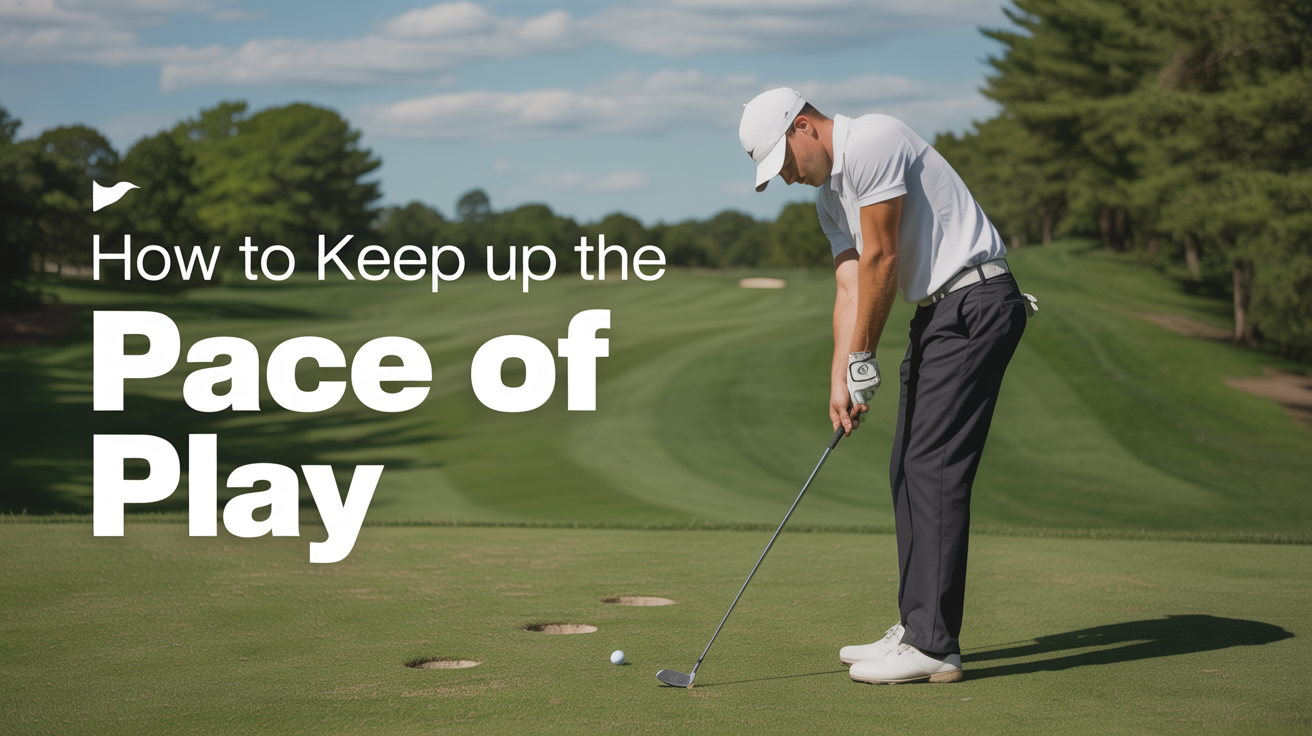
Why pace of play matters
Nobody signs up for a five-hour round on a Tuesday afternoon. Slow play is one of the most common complaints on public courses, and new golfers are often nervous about contributing to it. The good news: you don't need to play well to play fast. Pace of play in golf is mostly about habits, awareness, and a willingness to keep moving even when the round isn't going your way.
Most 18-hole rounds are meant to run between three and a half and four and a half hours, depending on the course and how busy it is. Keeping up doesn't mean rushing your shot. It means being ready when your turn comes and not making others wait while you figure out what club to hit.
What ready golf means
Ready golf is simple: whoever is ready to hit, hits. It replaces the traditional "honors" system, where the player with the lowest score on the previous hole goes first, with something more practical. If you're standing at your ball and you're ready to swing, go ahead, even if technically someone else has "honors."
When ready golf applies
Ready golf works best in casual and recreational rounds. It's standard practice at most public courses and is encouraged for faster rounds. The only exception is if someone is in your line of sight when you hit, which is a safety issue, not a pace issue.
A few common ready-golf situations:
- You're on the tee box and your playing partner is still rummaging through their bag. Tee up and go.
- You reach your ball first and your partner's ball is farther away but they're not ready yet. Hit yours.
- On the green, if you're closer to the hole but ready to putt before someone who's away is set up, putt first.
Ready golf won't make you look rude. Other golfers appreciate it.
Being efficient between shots
A lot of lost time happens between shots, not during them. Here's where beginners tend to bleed minutes without realizing it.
Walk with a purpose
After you hit, don't stand and watch your ball land for 30 seconds. Start moving toward it. Watch where it goes, then go there. If you're riding in a cart, drop your partner off at their ball and then go to yours.
Plan your shot while others hit
This is the easiest time-saver there is. While you're waiting for a playing partner to swing, look at your lie, pick your target, and narrow it down to two clubs. By the time it's your turn, the only decision left is which of those two to pull.
Club selection doesn't need to be a committee meeting
New golfers sometimes freeze over club selection because they're not sure of their distances yet. A reasonable approach: pick the club that gets you to the front of the green on a decent strike. If it's wrong, you'll learn for next time. Standing over the bag for two minutes doesn't make the decision better.
Leave the bag in the right place
When you walk up to the green, set your bag or park the cart on the side closest to the next tee. That way, after you hole out, you're already pointed in the right direction. It sounds minor, but it adds up over 18 holes.
Keeping up with the group ahead, not behind
This is the official standard on every course: you are responsible for staying close to the group in front of you, not worrying about who's behind you. If there's a gap between your group and the one ahead, you're slow, regardless of how fast the group behind you is moving.
A useful check-in point is the tee box. If you arrive at a tee and the group ahead is already on the green, you're a full hole behind. That gap should be closed if possible, either by picking up the pace for a few holes or, if a hole opens up, playing through.
If you're consistently watching the group ahead tee off from halfway down the fairway, something needs to change.
When to let a group play through
Waving a group through is not an admission of failure. It's a courtesy, and it's part of golf etiquette that every beginner should know.
Signs it's time to wave through
- A single player or a twosome is right behind your foursome on multiple consecutive holes.
- You've had a slowdown because of a lost ball, a tricky lie, or someone in your group who needed extra time.
- The group behind is visibly waiting at every tee.
The way to do it: when you arrive at a tee box and the group behind is waiting, wave them up and step aside. Let them hit and play through. A quick "go ahead" and a step back is all it takes.
Picking up your ball as a beginner
This one's important and often overlooked in beginner instruction. If you're taking nine or ten shots on a hole, you don't have to hole out every time. Most casual rounds allow players to pick up once they've hit a reasonable number of strokes over par.
A common guideline is "double par plus one," meaning on a par-4, you pick up after seven or eight shots. Check how golf scoring works to understand par and what double-par means for each hole.
For pace purposes, no one in your group wants to watch you chip and putt for another four shots on hole three when you're already at ten. Picking up keeps the round moving and keeps the experience enjoyable for everyone.
If you're playing in a casual round or a scramble, picking up is almost always acceptable. In a formal competition or stroke-play event, check the local rules first.
Quick-reference habits for a faster round
These are the things experienced golfers do without thinking about them. As a beginner, making them deliberate now means they'll become automatic quickly.
| Habit | Why it helps |
|---|---|
| Walk toward your ball while others hit | Saves 30-60 seconds per hole |
| Pre-select 2 clubs before it's your turn | Eliminates decision lag |
| Park the cart or set the bag toward the next tee | Removes backtracking after the green |
| Mark your scorecard at the next tee, not the green | Clears the green faster for the group behind |
| Know the basic rules before you get stuck | Avoids long rules discussions mid-round |
| Pick up when the hole is out of reach | Keeps everyone moving |
Knowing the basic rules of golf also helps here. A lot of time gets burned when players don't know what to do with an unplayable lie, a ball in a hazard, or a lost ball. If you know the procedure ahead of time, you spend thirty seconds instead of five minutes.
Frequently asked questions
How long should a round of golf take for beginners?
On an 18-hole course, most recreational rounds run between four and four and a half hours. Beginners sometimes take a bit longer, especially early on. If you're playing a nine-hole executive course or a par-3 layout, figure on two hours or less. The key is staying close to the group ahead, not hitting a specific time target.
Is it rude to ask a slow group to let you through?
It can feel awkward, but it's actually standard course etiquette. The polite way is to wait for a natural pause, like when they're between holes, and say something simple: "Would you mind if we played through?" Most golfers will say yes without a second thought. Avoid doing it in the middle of a hole or while someone is about to swing.
Do I have to wait my turn on the tee box?
In a formal competition, yes, the player with honors tees off first. In a casual round, ready golf is common and actively encouraged. If you're ready and no one else is, go ahead. Just make sure no one is standing in a dangerous spot when you swing.
What should I do if I lose a ball and slow my group down?
Take a quick look, no more than three minutes, which is the maximum allowed under the rules anyway. If you don't find it in that time, drop a ball near where you think it went (with a one-stroke penalty) and keep moving. It's better to take the penalty and maintain pace than to hold up your entire group for a ball that probably landed in a bush. Your playing partners will appreciate the decision.
What is the "ready golf" rule exactly?
Ready golf isn't an official rule in the traditional sense but a widely accepted practice endorsed by governing bodies for recreational rounds. It means players hit when they're ready rather than following strict honors order, as long as it's safe to do so. The goal is to keep play moving without anyone having to wait longer than necessary between shots.