How to Stop Hooking the Golf Ball
Learn why you're hooking the golf ball and how to fix it with simple swing adjustments to grip, stance, and club path.
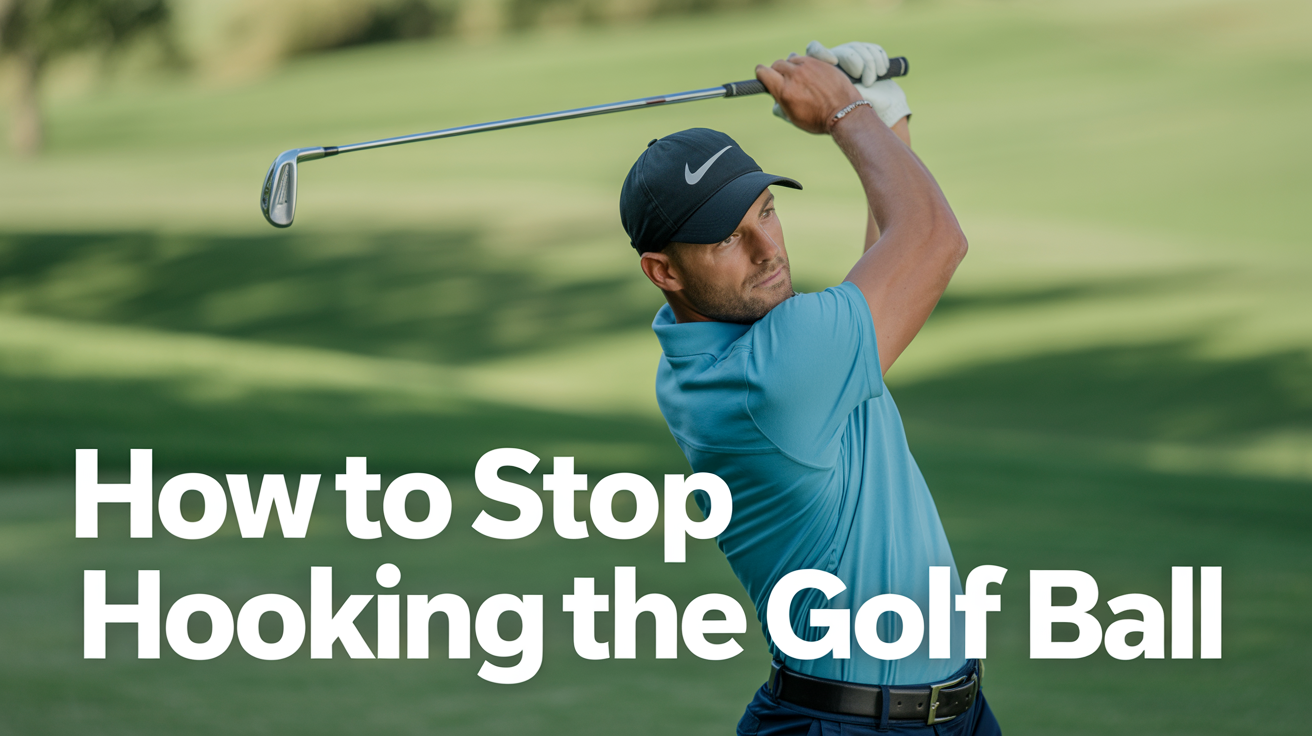
A hook curves sharply to the left for a right-handed golfer, usually much farther left than you intended. If the ball starts on line and then dives hard left at the end of its flight, you are dealing with a hook. The good news: hooks almost always come from a small set of fixable causes, and once you understand what is happening, the corrections are straightforward.
Hook vs Slice: What Is Actually Different
A hook and a slice are opposite ball flights caused by opposite spin. A slice curves right (for a right-hander) because the clubface is open at impact relative to the swing path. A hook curves left because the clubface is closed at impact relative to the swing path.
That last part matters. The clubface does not have to be pointing left in an absolute sense. It just has to be pointing left of wherever the club is traveling. That combination creates counter-clockwise sidespin, which is what makes the ball hook.
Knowing this distinction helps you diagnose your own miss. If the ball starts left and keeps going left, the face is pointing well left. If the ball starts on line or even slightly right but then curves hard left, the face was slightly closed relative to a path that was swinging out to the right. Both produce hooks, but the fix is slightly different in each case.
Why Do I Hook the Golf Ball?
Most hooks trace back to one or more of these three areas.
Grip That Is Too Strong
A "strong" grip means your hands are rotated too far to the right on the handle (for right-handers). You can check this by looking at how many knuckles are visible on your left hand at address. Two knuckles is neutral. If you can see three or four, your grip is strong.
A strong grip pre-sets the clubface in a closed position. As you swing through, it is difficult to return the face to square, and the face ends up even more closed at impact. The result is a hook.
The fix is to rotate your hands back toward neutral. Move your left hand slightly to the left until you see two knuckles, and adjust the right hand to match. This feels weak at first, especially if you have gripped strongly for a long time. Give it a few sessions before deciding.
For a more detailed look at grip fundamentals, see how to grip a golf club.
Swing Path That Goes Too Far Inside-Out
The path your club travels through impact can cause a hook even when the grip is fine. An inside-out path means the club is swinging from inside the target line toward outside the target line at the moment of contact.
If the clubface is square to the target but the path is swinging out to the right, the face is closed relative to that path, and the ball will hook. If the face is also slightly closed to the target, the hook will be severe.
This path usually develops when a golfer drops the club too far to the inside on the downswing. The hands and arms fall behind the body, the club approaches from a very shallow angle, and the only way to make contact is to swing out to the right.
Drills that help: Place a headcover or alignment stick just outside the ball (on the far side, slightly ahead of it). The goal is to swing through without hitting it, which encourages a more neutral path rather than an extreme inside-out one.
Hands Releasing Too Early or Too Aggressively
The rotation of the forearms and hands through impact is called release. A controlled release is a normal part of the swing. An early or aggressive release flips the face closed before the ball is struck.
This often happens when a golfer tries to hit the ball harder or help the ball into the air. The hands race ahead of the body, the face closes, and the ball hooks.
The correction here is not to stop rotating your hands, but to let body rotation lead the way. If your hips and torso turn through impact before your hands flip, the face has less time to close.
How to Fix a Hook in Golf: Practical Adjustments
Work through these in order. Each one addresses a different root cause, so finding which one makes the biggest difference tells you where your swing is actually breaking down.
| Adjustment | What to Change | What to Look For |
|---|---|---|
| Weaken the grip | Rotate left hand left until two knuckles show | Shots that start straighter, less curve |
| Check ball position | Ball should be inside the left heel with longer clubs | Starting direction improves |
| Slow the arms down | Let hips lead into impact before arms swing | Less flip, more solid contact |
| Widen the stance | A very narrow stance can cause early rotation | More stability through the shot |
| Check your posture | Standing too close promotes inside-out path | More room to swing on neutral path |
For a refresher on setup fundamentals that affect swing path, see golf stance, posture, and ball position for beginners.
On the Range: A Simple Drill Sequence
Start with short clubs. A 7-iron or 8-iron gives you faster feedback without the exaggerated results of a driver.
Hit ten balls with a deliberately weak grip and pay attention to starting direction, not curve. If the ball starts right and holds its line, your old grip was the issue. If the ball still curves left even with the weaker grip, the path or release is the bigger problem.
Next, set two alignment sticks on the ground: one along your target line and one just inside your feet, pointing at the target. Use these to confirm your stance is square. A closed stance (front foot pulled back from the target line) tends to promote the inside-out path that causes hooks.
Finally, make practice swings focusing on the feeling of your hips clearing before your hands do anything. Think of it as turning your belt buckle toward the target before the club arrives at the ball. This is not a trick or a compensation. It is what a neutral swing feels like.
For a full breakdown of how the swing is supposed to work from takeaway to follow-through, see how to swing a golf club: a step-by-step beginner guide.
A Note on Course Safety
Hooks can send the ball onto adjacent fairways or toward other players. When playing on a real course, call "fore left" loudly if a hook looks like it could reach another group, and pause until you know where the ball has gone. Warming up sensibly before a round, especially rotating through the hips, can also reduce the grip-and-flip pattern that produces bad hooks under pressure.
Frequently Asked Questions
Is a hook worse than a slice for a beginner? Neither is better or worse. A slice loses distance because of the spin and often sends the ball well right. A hook can lose distance too, but the curve is sharper and often lower, which makes it harder to predict. Both are fixable with the same attention to grip, path, and face angle.
Why does my hook get worse when I try to hit harder? Swinging harder tends to amplify whatever the hands are doing. If your release is already slightly early, more speed makes it earlier. The face closes more aggressively, and the hook sharpens. Slowing down your arm swing for a few shots often produces straighter results, which then tells you the release is the culprit.
Can the wrong club shaft make a hook worse? A shaft that is too flexible for your swing speed can contribute to the face closing at impact, because the shaft bows forward and rotates the face closed. This is a secondary factor for most beginners, and grip and path issues are worth sorting first. If you have fixed those and still hook consistently, a club fitting is worth considering.
How long does it take to fix a hook? A grip change can produce noticeable results in one or two range sessions. Path and release changes take longer because they require building a new movement pattern. Most golfers see real progress over three to six weeks of consistent practice, with some days where the old pattern returns before the new one fully settles in.
Should I try to fix my hook on the course or only on the range? Focus your fixing on the range. On the course, pick one simple thought, such as "two knuckles" for the grip check or "hips first," and let everything else go. Trying to overhaul the swing mid-round creates more confusion than it solves and makes the round less enjoyable.