Golf Stance, Posture, and Ball Position for Beginners
Learn the golf stance for beginners: how to set up athletic posture, find the right stance width, and position the ball correctly for every club.
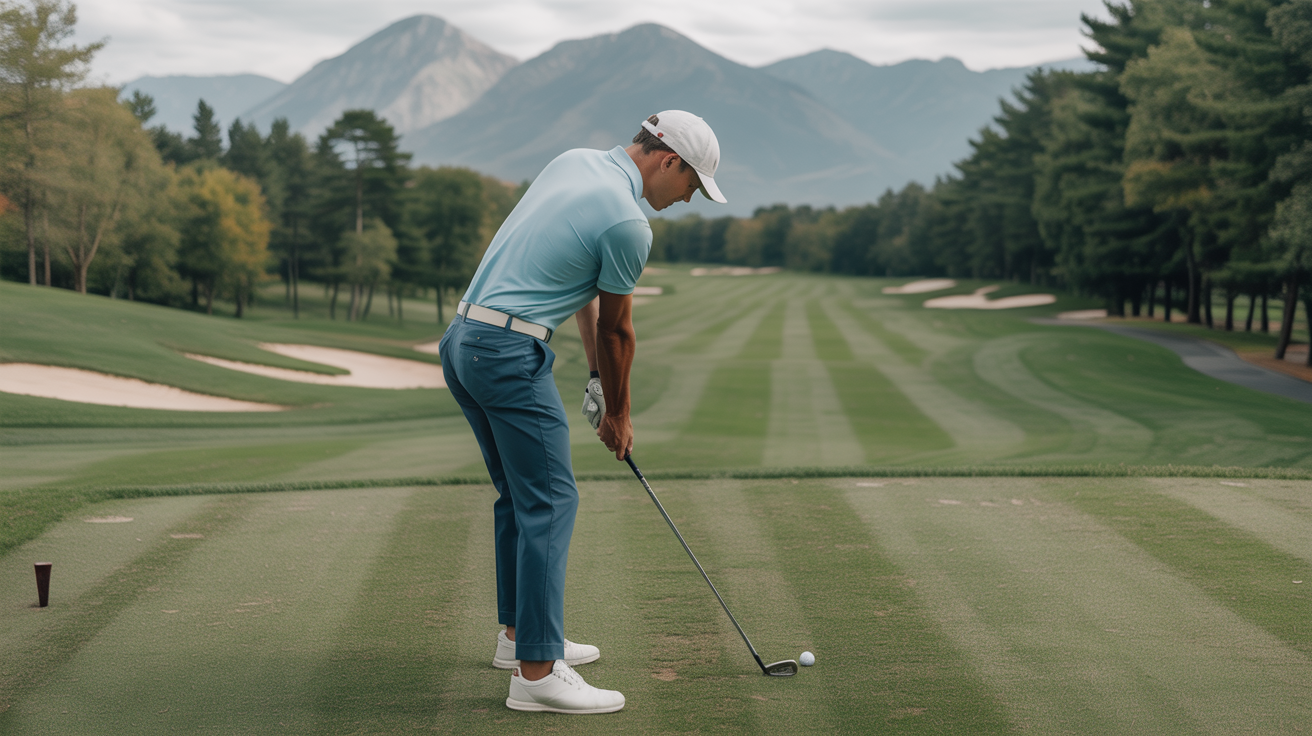
Before you worry about your swing, you need to sort out how you're standing. A solid golf stance and posture setup give every other part of the swing a chance to work. Get this right and a lot of other things fall into place on their own.
At a Glance
- Setup is where misses actually start. Fix stance, posture, and ball position before you touch swing mechanics.
- Hinge from your hips, not your lower back. Rounding your back to reach the ball loads the spine and restricts your shoulder turn.
- Stance width and ball position both shift by club: wider and more forward for the driver, narrower and more central for wedges.
- Weight sits on the balls of your feet, centered, not on your heels or toes.
- Alignment (feet, hips, shoulders parallel to the target line) is the part most beginners skip and the part that drifts fastest without a checkpoint.
- These are positions, not movements. You don't need athleticism to learn them, just ten focused minutes.
Why your setup matters more than you think
Most beginners focus on the swing itself, which makes sense, but the setup is where misses actually start. A poor stance leads to compensations mid-swing, and then you're chasing your tail trying to fix a problem that was baked in before the club even moved. Spend ten minutes on your setup and you'll hit better shots with less effort.
The good news is that setup fundamentals don't require any athletic ability. They're positions, not movements. Anyone can learn them.
Building an athletic posture from the ground up
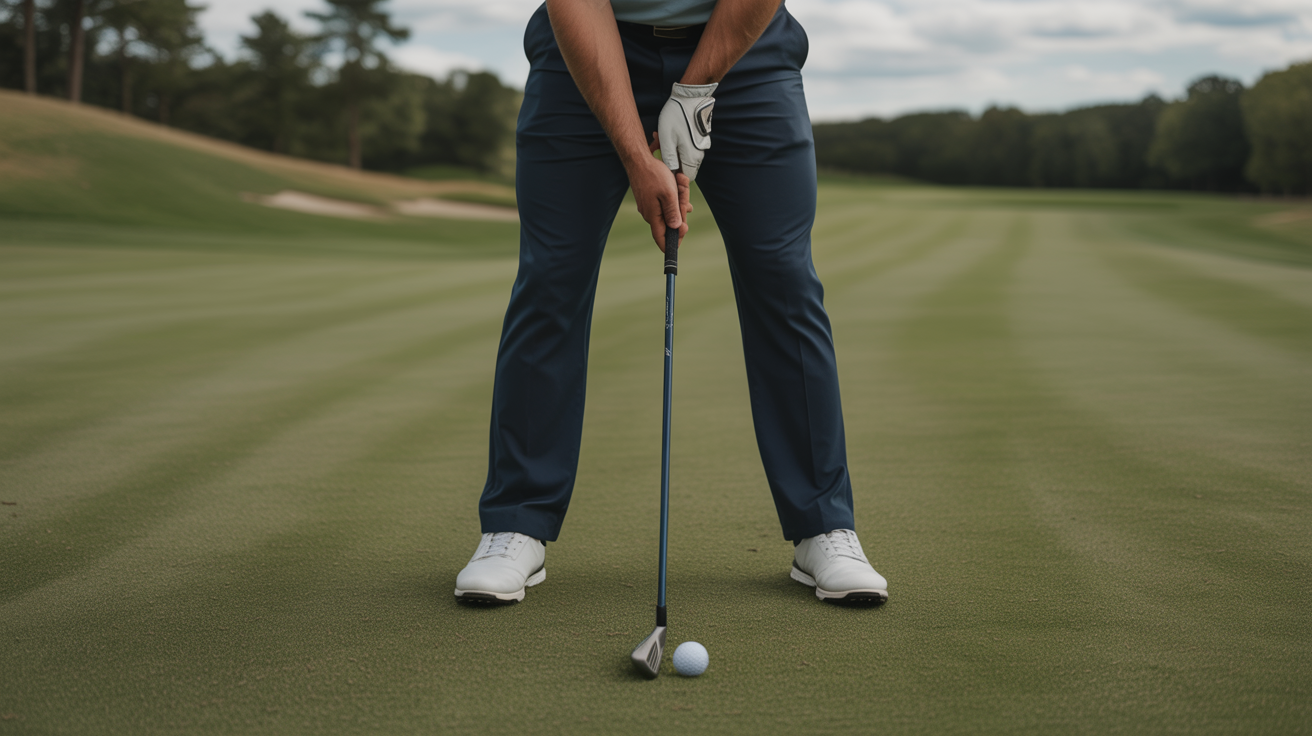
Think of golf posture setup the same way you'd think about getting ready to catch a ball or defend in basketball. You want to be balanced and ready to move, not rigid.
Start with your feet
Set your feet roughly shoulder-width apart. For a mid-iron, that usually means the insides of your heels line up under your shoulders. Some people go slightly wider, some slightly narrower, and that's fine. The point is that you need a stable base without being so wide that your hips can't rotate.
Turn your lead foot (the left foot for a right-handed golfer) out toward the target by about 20 to 30 degrees. This opens your hip a little and gives you somewhere to rotate into on the downswing. Your trail foot can be mostly square or flared out just a touch.
Tilt from the hips, not the waist
Here's where most beginners go wrong. They bend their back in a C-shape to get down to the ball. That loads your lower back, restricts your shoulder turn, and generally makes life harder. The problem isn't just theoretical: research comparing golfers with and without a history of low back pain found that golfers with back pain showed greater spinal flexion at address and reduced trunk rotation capacity during the swing, effectively pushing the spine into a more twisted, less mobile position throughout the motion. A rounded-back setup sets that pattern in place before you've even started the club back.
Instead, hinge forward from your hip joints, the crease at the top of your legs, while keeping your spine relatively straight. Your chest tilts toward the ground. How much depends on the club: a driver needs only a slight tilt since the ball is on a tee, while a wedge has you bending more noticeably because the ball is lower and you're standing closer.
As you hinge, let your arms hang down from your shoulders. Your hands should fall roughly in front of your thighs, not your knees. If your hands are way out toward the ball, you're reaching. If they're tight against your legs, you're too upright.
Soft knees, not a deep squat
Flex your knees slightly after you've hinged. "Slightly" is the key word. You're not squatting, you're not locking them out, you're just removing the stiffness. Imagine someone just nudged the back of your knees and you eased into a comfortable, ready position. That's about right.
Weight should sit on the balls of your feet, not your heels. If you rocked backward, you'd fall over. If you rocked forward, you'd tip. You want to feel centered and springy.
Common posture faults and quick fixes
| Fault | What it looks like | Quick fix |
|---|---|---|
| C-shaped back | Rounded spine, chest caved | Hinge from hips, keep spine long |
| Too upright | Standing nearly straight, reaching with arms | Add more hip hinge until hands hang under shoulders |
| Reaching | Hands stretched far from body | Stand closer, let arms hang naturally |
| Weight on heels | Rocking backward, losing balance | Shift weight forward to balls of feet |
| Locked knees | Stiff legs, no spring | Add a soft flex, like easing into a ready position |
| Stance too wide | Hips can't turn freely | Narrow stance until hips rotate freely |
Stance width by club type
Your stance width shifts depending on what club you're holding, because each club requires a different amount of rotation and stability.
| Club | Stance width guidance |
|---|---|
| Driver | Widest, just outside shoulder-width |
| Fairway woods | Slightly inside driver width |
| Long irons (4-5 iron) | About shoulder-width |
| Mid irons (6-7-8 iron) | Slightly narrower than shoulder-width |
| Short irons and wedges | Narrowest, inside shoulder-width |
The driver is the longest club and you're making the biggest swing, so you need more base. Wedge shots are controlled and precise, so a narrower stance gives you better balance through that compact motion.
Ball position in golf: where to place it in your stance
Ball position in golf is one of those things that sounds simple until you watch a beginner step up to the ball and guess where to put it every single time. Here's a framework that actually works.
The general rule: the ball moves progressively back in your stance as the clubs get shorter. The driver sits furthest forward, off the inside of your lead heel. A wedge sits in the middle of your stance, roughly between your feet.
| Club type | Ball position |
|---|---|
| Driver | Just inside lead heel |
| Fairway woods | One ball-width back from driver |
| Hybrids | Two ball-widths inside lead heel |
| Long irons | Three ball-widths inside lead heel |
| Mid irons | Middle-to-slightly-forward of center |
| Short irons and wedges | Center of stance |
Why does this work? Longer clubs sweep the ball at a low point or even slightly on the upswing (especially the driver). Shorter clubs need a slightly descending strike to compress the ball cleanly. Moving the ball back encourages that steeper contact.
The effect is measurable, not just a feel-based tradition. Motion-capture research on ball position and address posture in elite golfers found that even small changes in ball position, moving it forward or back, or side to side, produced significant changes in clubface aim, swing path, and angle of attack at impact. In other words, where you place the ball isn't a minor detail. It directly shapes how the club arrives.
This is a starting framework, not a law. If you're consistently hitting behind the ball with mid-irons, moving the ball a touch back can help. If your wedge shots are thin, experiment with moving it slightly forward. Pay attention to what's actually happening. If you find you're chronically catching the ball heavy no matter where you place it, that's usually a weight-transfer problem rather than a ball-position problem, and it's worth reading about fixing a slice and other common swing faults, since the two often share a root cause.
Alignment: the part everyone skips
You can have a perfect stance and terrible aim. Alignment is worth checking regularly, because it's one of those things that drifts without you noticing.
Good golf alignment means your feet, knees, hips, and shoulders are all roughly parallel to your target line, not pointing at the target. This trips people up. If you aim your body at the flag, you're actually aiming to the right of it (for a right-hander), because the ball is out in front of you.
A useful drill: lay two alignment sticks or even two spare clubs on the ground, one along your toe line, one along the ball-to-target line. They should be parallel, like two railway tracks. Then step in and practice hitting balls without picking them up. Over time your body learns what "square" feels like and you'll stop guessing. Doing this for five minutes before every range session is one of the cheapest ways to improve accuracy, because it costs nothing and takes almost no time.
Before swinging, check your grip foundation too. A sound grip and a sound stance work together. If either one is off, the other has to compensate.
Putting it together before you swing
Once you've got the pieces, here's a simple pre-shot routine for your setup:
- Stand behind the ball and pick a specific target, a spot on the green, a distant tree, anything specific.
- Walk into your address position from the side, placing the clubface behind the ball first and aiming it at your target.
- Set your feet, hinging from the hips as you settle in.
- Check your knee flex, ball position, and that your weight is on the balls of your feet.
- Take one look at the target, one look at the ball, and go.
A consistent pre-shot routine turns setup into a habit rather than a checklist. Once it's automatic, you free up mental space for actually swinging the club. For more on what happens after the setup, a step-by-step beginner guide to the swing picks up right where this leaves off.
Frequently asked questions
How wide should my stance be for golf?
For mid-irons, your stance should be roughly shoulder-width (inside of heels under your shoulders). Widen it slightly for longer clubs like the driver, and narrow it for wedges and short irons. If you're unsure, err on the side of slightly narrower rather than too wide. A stance that's too wide limits hip rotation.
Where should my weight be at address?
Your weight should be centered and on the balls of your feet, not your heels or your toes. For most shots it splits fairly evenly between both feet. The driver is a slight exception: some players favor a little more weight on the trail foot at setup to encourage the upswing contact the driver needs. But for irons, stay centered.
Why do I keep hitting behind the ball?
Hitting behind the ball usually means your low point is too far back, or you're hanging back on your trail foot through impact. Check that your ball position isn't too far forward in your stance, and make sure you're shifting your weight toward the target as you swing through. If you're chronically hitting fat shots with irons, see the tips on fixing a slice and common swing faults since weight transfer problems can cause both.
How bent forward should I be at address?
Enough that your arms can hang freely without reaching, but not so much that your back rounds. For a mid-iron, most golfers find themselves tilted somewhere around 30 to 40 degrees from vertical. The key check: can you see the ball without lifting your head, and do your arms hang directly below your shoulders? If yes, you're in the right zone.
Should my feet be perfectly square to the target line?
Not quite. Your lead foot (left foot for right-handers) should be flared out toward the target by about 20 to 30 degrees. This opens your hip slightly and makes it much easier to rotate through the ball at impact. Your trail foot can be square or only mildly flared. Fully square feet on both sides tend to restrict the follow-through.
Can bad posture actually cause back pain, or is that overstated?
It's not overstated. Golfers who round their spine at address and lose trunk rotation during the swing show up disproportionately in studies of golf-related low back pain, and the standard coaching fix, hinging from the hips with a flatter spine, is also the biomechanically sound one. You don't need to treat every round like a physical therapy session, but if your back is sore after golf and your setup includes a C-shaped spine, that's the first thing worth changing.
Does ball position change much between a driving range mat and real grass?
A little. Range mats are flat and forgiving, so a slightly off ball position rarely punishes you. On real turf, especially with irons, a ball positioned too far forward makes it easy to catch the ground before the ball. If your range game doesn't translate to the course, double-check your ball position is matching the chart above rather than drifting forward out of habit.