How to Choose Your First Set of Golf Clubs
Buying your first golf clubs doesn't have to be overwhelming. Here's how to pick a beginner golf club set that fits your game and your budget.
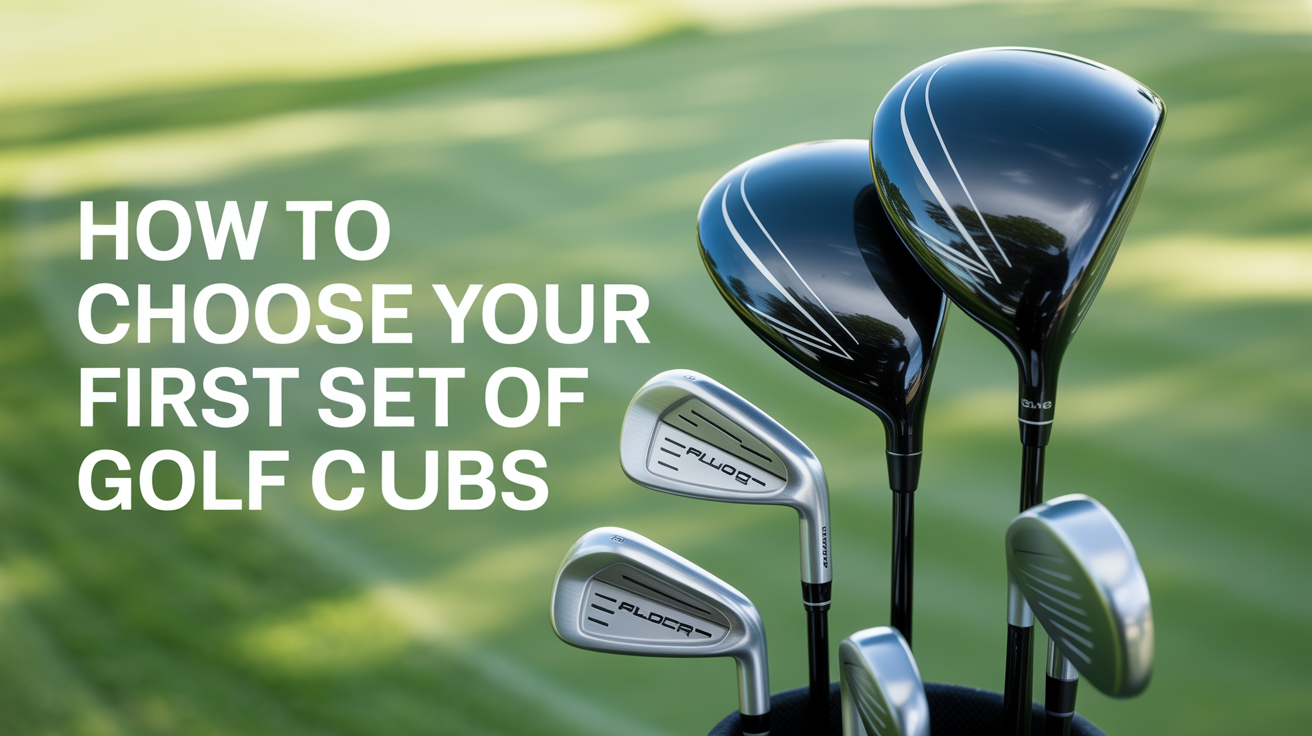
Picking your first set of golf clubs feels more complicated than it should be. Walk into a golf shop and you're hit with hundreds of options, confusing specs, and prices that range from suspiciously cheap to genuinely alarming. The good news: beginners don't need much, and what you do need isn't hard to figure out once someone explains it plainly.
Here's how to choose golf clubs that will actually help you learn the game.
How many clubs do you actually need to start?
The rules of golf allow up to 14 clubs in your bag, but carrying all 14 as a beginner is overkill. You'll have enough to think about without also deciding whether to reach for your 4-iron or your 4-hybrid on every shot.
Most teaching pros recommend starting with somewhere between 7 and 10 clubs. A reasonable starter selection looks something like this:
- A driver (1-wood)
- A fairway wood or hybrid (3-wood or a 3/4 hybrid)
- A middle iron (6 or 7-iron)
- A short iron (9-iron)
- A pitching wedge
- A sand wedge
- A putter
That covers every situation you'll run into as a beginner, without turning your bag into a guessing game. We go deeper on this in what's in a golf bag and why the 14-club limit exists if you want the full picture.
Box set or piece it together yourself?
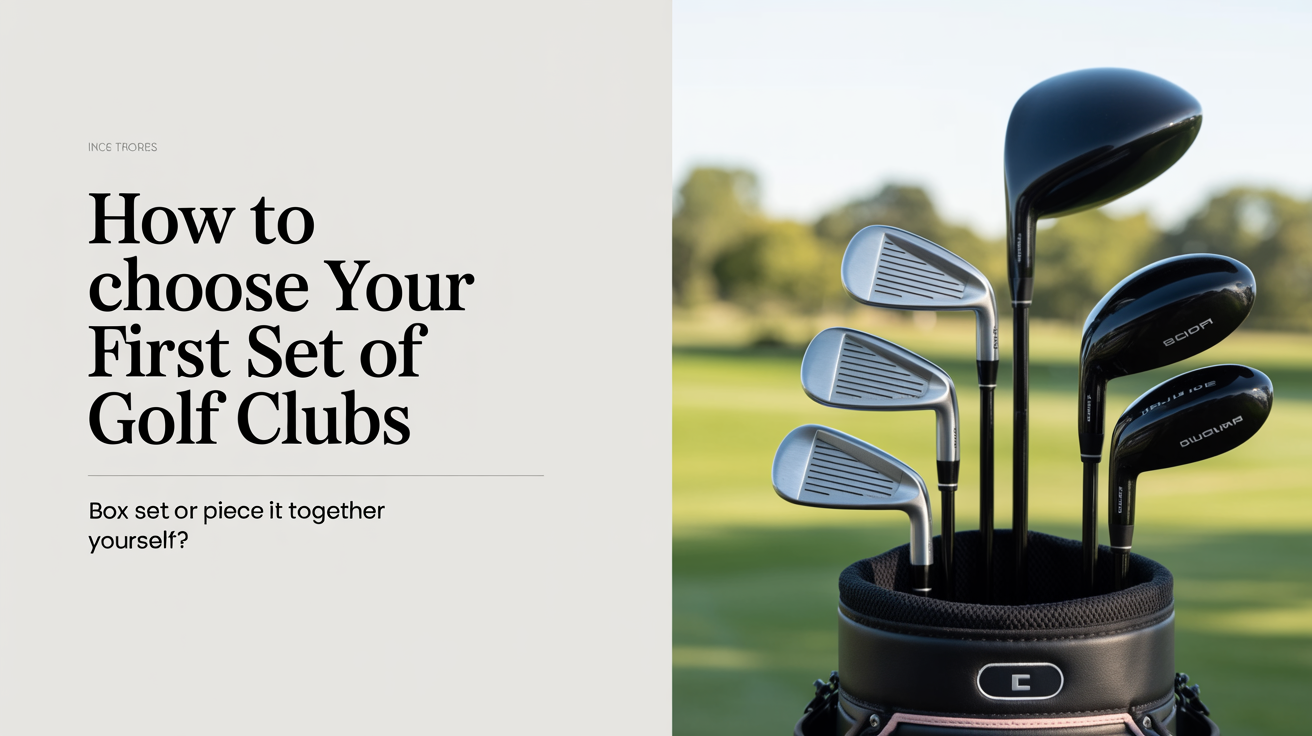
For most beginners, a pre-packaged complete set is the right call. These sets are designed to work together, and they typically include everything you need at a single price point. You don't have to match shafts, decide on loft progressions, or figure out which putter head shape suits you. You just buy the set and start playing.
Piecing together your own bag from individual clubs makes more sense once you know what you like and what gaps you actually have. At that point you might want a specific wedge or a different putter. But in the beginning, that kind of customization is solving a problem you don't have yet.
That said, not all complete sets are created equal. Avoid sets that skip the hybrids and replace them with long irons (3-iron, 4-iron). Long irons are genuinely hard to hit, even for experienced players. A set built around cavity-back irons and hybrids will be far more forgiving.
What to look for in beginner golf clubs
Cavity-back irons, not muscle backs
Golf irons come in two broad shapes: muscle backs (also called blades) and cavity backs. Blades have a smooth back face and concentrate the weight behind a small sweet spot. They reward precise contact and punish everything else.
Cavity-back irons have material scooped out from the back, moving weight toward the edges of the club face. This makes the sweet spot larger and more forgiving when your contact isn't perfect, which as a beginner will be most of the time. Any iron labeled "game improvement" or "super game improvement" will have a cavity back. That's what you want.
Graphite shafts over steel
Shafts come in graphite or steel. Steel shafts are heavier and less expensive. Graphite shafts are lighter, flex more during the swing, and help generate extra club head speed with less effort.
For beginners, graphite wins. The lighter weight makes the club easier to swing correctly, reduces strain on your arms and wrists, and helps you get the ball airborne. Steel shafts make more sense later, if and when you develop a faster, more consistent swing and want more feedback from the club.
Hybrids instead of long irons
A hybrid is a club that combines features of a fairway wood and an iron. They're easier to hit than long irons, launch the ball higher, and are more forgiving on off-center contact. Most beginner sets now include one or two hybrids in place of the 3 and 4-irons, which is exactly right.
If a set you're considering includes a 3-iron, check whether it can be swapped for a hybrid. Some manufacturers offer that option. If not, that set probably isn't aimed at beginners.
A forgiving driver
Drivers have gotten dramatically more forgiving over the last decade. A modern driver designed for game improvement will have a larger club face, a deeper center of gravity to help you launch the ball higher, and perimeter weighting to reduce the side spin from mishits. You don't need the most expensive driver on the shelf, but you do want one that's been designed with forgiveness in mind rather than raw distance for tour players.
New vs. used: what's worth spending on
Buying used is a legitimate option, especially if you're not sure how seriously you'll take the game. Golf clubs hold up well over time, and a set from two or three years ago is likely to perform nearly as well as a current model.
The caution is knowing what to look for. Check the club faces for wear, inspect the grooves on irons and wedges (worn grooves affect spin and control), and make sure the grips aren't cracked or slick. Buying from a reputable golf retailer with a used inventory is usually safer than a blind purchase from a private seller.
We cover exactly what to check for in buying used golf clubs without getting burned, which is worth reading before you shop secondhand.
Budget ranges for a beginner set
Prices vary quite a bit depending on whether you buy new, used, or a premium complete set. Here's a rough breakdown:
| Budget range | What you can expect |
|---|---|
| Under $150 | Basic complete sets; functional but limited; often include low-quality bag |
| $150-$350 | Solid beginner complete sets with forgiving irons and hybrids; most beginners start here |
| $350-$600 | Better quality sets with improved feel; graphite throughout; more options for customization |
| $600+ | Premium sets; often individual clubs assembled together; closer to what better players use |
For most people just starting out, the $200-$350 range hits the sweet spot. You're getting clubs that will genuinely help you improve, without spending serious money on a hobby you haven't fully committed to yet.
One thing to watch at the low end: sets under $100 often cut corners on shaft materials, grip quality, and club head construction. They'll get you on the course, but they won't do you any favors in terms of learning to swing consistently.
Should you get fitted?
A club fitting means a professional measures your height, arm length, swing speed, and other factors to recommend specific club specifications for your body and swing. Fitted clubs are built or adjusted to match you rather than the average golfer.
Honest answer: a beginner doesn't need a full custom fitting right away. Your swing will change a lot in the first year as you take lessons and play regularly. Fitting too early means fitting clubs to a swing you're about to change.
That said, a basic fitting check is worth doing even for beginners. Getting confirmed that standard-length clubs suit your height (or that you need something slightly longer or shorter) costs little and can save you from fighting equipment that's working against you. Many golf retailers offer this as part of the purchase process.
Once you've been playing for six months to a year and have some consistency in your swing, that's when a more thorough fitting makes real sense.
If you're still figuring out how many clubs you actually need to carry from the beginning, how many golf clubs does a beginner actually need breaks that down in more detail.
Frequently asked questions
Do I need a full set of 14 clubs to start playing?
No. Most beginners do fine with 7 to 10 clubs. A driver, a fairway wood or hybrid, a few irons (6, 7, 9), a pitching wedge, a sand wedge, and a putter covers everything you'll need on the course. Adding more clubs before you know what you're doing just adds confusion.
What's the difference between game improvement and super game improvement irons?
Both have cavity backs and are designed for forgiveness, but super game improvement irons take it further. They typically have a larger club face, even more perimeter weighting, and sometimes additional offset (where the face sits slightly behind the hosel) to help beginners square the club at impact. If you're a complete newcomer, super game improvement is fine. If you've played a little and have some consistency, standard game improvement gives you a bit more feedback.
Is it worth buying premium clubs as a beginner?
Probably not yet. High-end clubs are designed for players who can already make consistent contact and want more precise feel and workability. As a beginner, a $250 set of cavity-back irons will help you improve just as much as a $900 set. Spend the difference on lessons, which will do far more for your game.
Can I buy clubs online without trying them?
Yes, but you're taking more of a risk on fit. If you know your approximate height and have read the manufacturer's sizing guide, buying online works fine for most beginners getting a complete set. If you're buying individual clubs or are between sizes, it's worth visiting a shop to hold the clubs and check the length feels right.
What should I look for in a beginner putter?
A mallet putter (the larger, more geometric-looking head) tends to be more forgiving on off-center hits than a blade putter (the classic thin design). Face-balanced mallets also help keep the face pointed at the hole through your putting stroke. For a beginner, any putter that feels comfortable and lets you see the alignment aid clearly is a good start. Putting is mostly feel, and feel is personal.