The Mental Game: How to Stay Calm and Play One Shot at a Time
Golf's mental game trips up beginners more than the swing. Learn how to stay focused, manage nerves, and reset after bad shots.
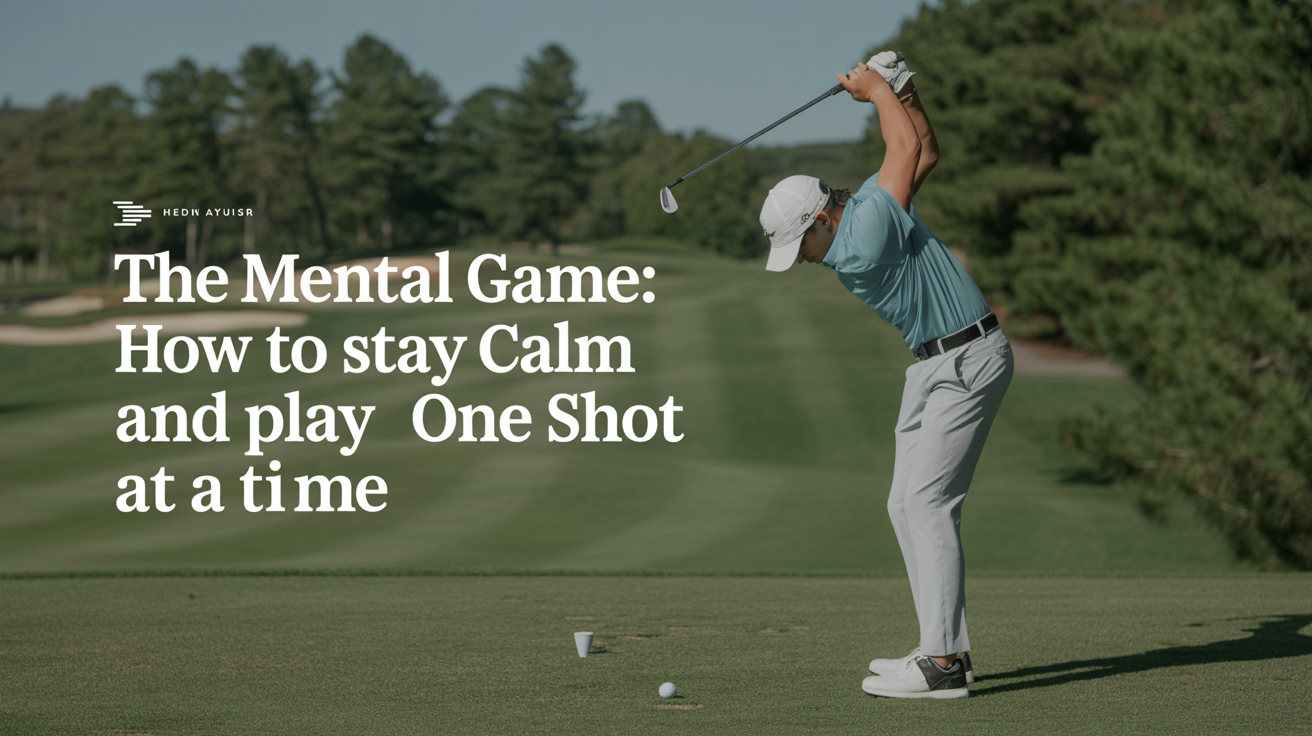
Most beginners expect the hard part of golf to be the swing. Then they step onto the first tee, feel their hands go clammy, and top the ball thirty yards. The swing was fine all week on the range. What changed?
The mental game. It is the piece no one teaches you at the start, and it explains why two players with identical ball-striking ability can score ten strokes apart on the same course. This guide covers what the golf mindset for beginners actually looks like in practice, how to handle nerves, and how to stop one bad hole from ruining the next five.
Why the Mental Game Matters More Early On
New golfers are still building muscle memory, which means their swing is fragile under pressure. A tense grip changes the club path. A hurried tempo throws off contact. An anxious mind floods the body with enough adrenaline to turn a smooth 7-iron into a shanked mess.
The good news: you do not need years of experience to develop a steadier head. You just need a few repeatable habits that give your brain something useful to focus on instead of catastrophizing.
Managing First Tee Nerves
First tee nerves in golf are almost universal, even for experienced players. The difference is that experienced players expect them and have a plan.
Arrive early and hit balls. Even fifteen minutes on a practice green or hitting range loosens the body and gives your brain proof that the swing works today. Showing up cold to the first tee guarantees nerves will win.
Take a slower breath before you address the ball. A long exhale (five counts out, not in) activates the parasympathetic nervous system and physically lowers your heart rate within seconds. It sounds too simple, but it works.
Set a realistic target. Beginners standing on the first tee often aim at a distant flag or try to stripe it down the center. Pick a conservative target, something you can realistically reach. Hitting a comfortable 5-iron to a spot you can reach beats swinging hard at a target you cannot.
Accept that the first swing of the round will rarely be your best. Knowing this in advance takes away the sting when it happens.
Playing One Shot at a Time
"One shot at a time" is advice every golfer has heard. Few beginners understand what it actually means to do it.
It means your only job when you address the ball is to execute that single shot well. Not to calculate what you need on the back nine. Not to replay the three-putt from hole four. Not to worry about what your playing partner thinks of your backswing.
Here is a simple process that helps beginners stay present:
The Pre-Shot Routine
A pre-shot routine is not just a quirk of professional golfers. It is a repeatable sequence that shifts your attention from outcome to process. A basic version for beginners:
- Stand behind the ball and pick a specific target.
- Take one practice swing while looking at the target, not the ball.
- Step into your address position.
- Take one slow breath.
- Swing.
The routine does not need to be elaborate. It just needs to be the same every time, which trains your brain to recognize it as a transition into execution mode.
The Post-Shot Reset
What you do after a bad shot matters as much as the shot itself. Most beginners let a poor result carry into the next address, tightening the grip and rushing the backswing.
Give yourself a ten-second window to react. Feel frustrated if you need to. Then physically do something to mark the end of it: re-grip the club, take a step, exhale. After that, the shot is done. You are moving on.
This is not positive thinking. It is a practical way to stop one mistake from compounding into three.
How to Stay Focused for a Full Round
Golf rounds last four hours or more. Staying locked in for all eighteen holes is neither realistic nor necessary.
Think of your attention in two modes: relaxed and focused. Between shots, let your mind wander. Talk to your playing partners. Look at the view. During your pre-shot routine, switch fully into focused mode. That is when everything else shuts out.
This on-off pattern actually sustains concentration better than grinding intensely over every second of the round. Beginners who try to focus constantly tend to be exhausted and mentally fried by hole twelve.
A few other habits that help on longer rounds:
- Keep score conservatively. Beginners who obsess over every stroke tend to mentally collapse after a double bogey. Play to finish the hole, not to protect a number.
- Talk yourself neutrally, not harshly. The internal voice after a poor shot matters. "That came off the heel, adjust ball position" is useful. "I'm terrible at this" is not.
- Stay hydrated. Dehydration genuinely impairs focus, and most golfers do not drink enough water during a round.
A Quick Reference: Common Mental Traps and What to Do Instead
| Mental Trap | What It Looks Like | A Better Response |
|---|---|---|
| Outcome fixation | Thinking about score while over the ball | Focus only on target and swing feel |
| Carry-over anger | Gripping tighter after a bad shot | Ten-second reset, then let it go |
| Comparison to others | Watching your partner's swing mid-round | Eyes on your own ball and routine |
| Over-analysis | Changing swing thoughts every hole | Pick one thought and stick with it all round |
| First tee freeze | Standing over the ball for too long | Start your routine, commit to a target, go |
Building a Stronger Mindset Over Time
Mental toughness in golf is not a personality trait. It is a skill, and like chipping or putting, it gets better with deliberate repetition.
After each round, spend two minutes on a quick mental review. Not score-focused. Ask: Did I stick to my pre-shot routine? Did I reset after bad shots? Where did I lose focus? That habit builds self-awareness faster than any tip.
Pairing this kind of review with structured practice creates a feedback loop. You identify a mental pattern on the course, then you deliberately work on it during practice sessions, where the stakes are lower.
If you are brand new to the game and wondering where the mental game fits in your overall development, working with a PGA instructor early on gives you a foundation in the physical fundamentals so that mental errors are easier to separate from mechanical ones. When you are not sure if a bad shot came from your swing or your head, troubleshooting becomes guesswork.
One often-overlooked place to build mental habits is before you even reach the first hole. A proper pre-round warm-up does more than loosen your muscles. It gives your brain a few successful swings to draw on when nerves spike on the first tee.
Frequently Asked Questions
Is the mental game really that important for beginners, or should I focus on technique first?
Both matter, but they work together more than most beginners realize. A solid pre-shot routine and a post-shot reset habit can improve your scores immediately, even before your swing is consistent. You do not need to master the mental game before caring about it.
What should I think about when I'm standing over the ball?
Pick one thought, and make it process-focused rather than outcome-focused. Something like "smooth tempo" or "finish facing the target" works better than "don't miss right." Fewer thoughts, more committed.
How do I deal with slow play or delays that break my focus?
Breaks in the round are actually easier to handle once you stop fighting them. Use the wait to stay loose, stay hydrated, and stay relaxed. Re-engage your focus only when it is your turn. Trying to stay locked in through a fifteen-minute delay is exhausting and unnecessary.
What if I have a blow-up hole? How do I recover mentally?
Accept it quickly. A double bogey on one hole does not ruin your round unless you let it into the next hole. Use your reset cue (a breath, a re-grip, a physical step), remind yourself the hole is finished, and treat the next tee box as a clean start.
Can nerves ever be useful in golf?
Yes. A modest amount of activation improves performance by sharpening focus and increasing reaction speed. The goal is not to eliminate nerves but to keep them at a level where they help rather than interfere. The breathing and routine techniques above are aimed at bringing high nerves down to a useful range, not to zero.