How to Control Distance on Your Putts
Learn putting distance control with practical drills for beginners. Master lag putting, speed control, and how to judge putt distance on any green.
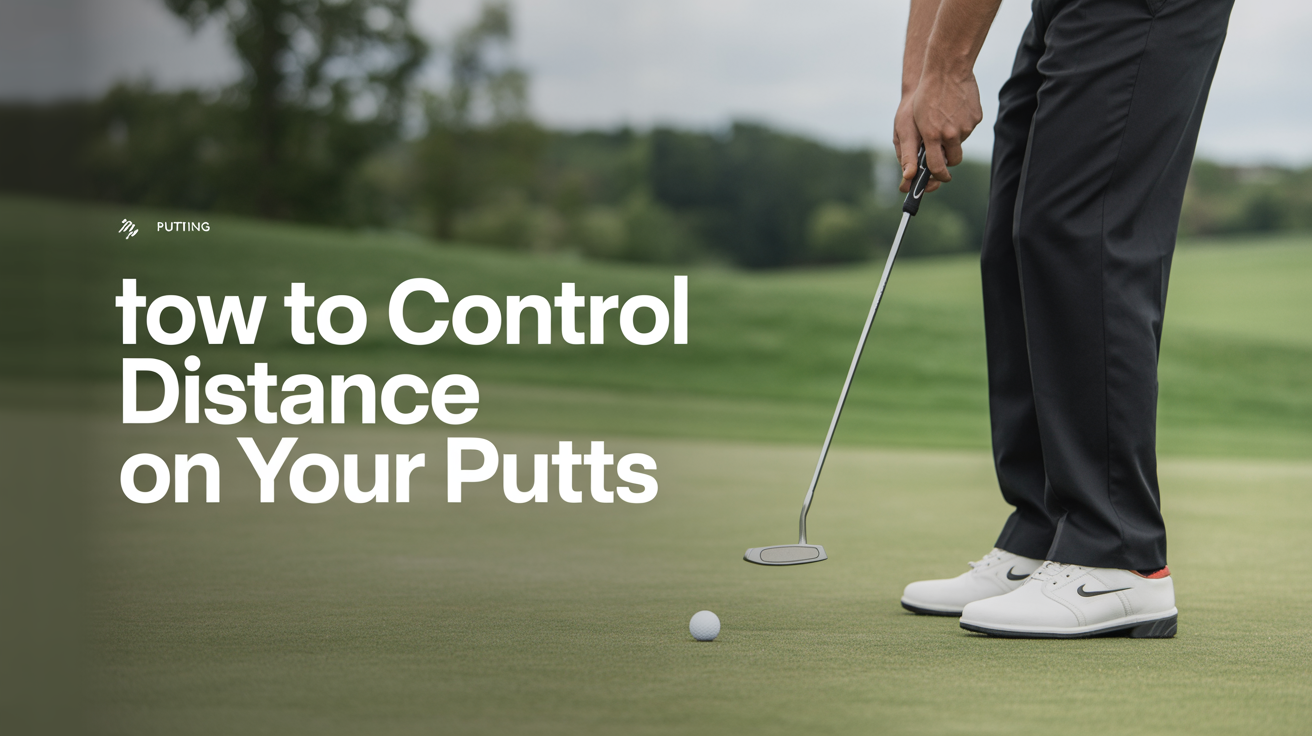
Most three-putts don't come from missing the line. They come from hitting the ball too hard or too soft. Once you understand that distance control in putting is a learnable skill rather than a gift, the whole game of managing greens starts to make sense.
This guide covers how to develop feel for putt distance, what lag putting actually means, and a handful of drills that give you a reliable feedback loop on the practice green.
The Fairway Primer is an independent resource and is not affiliated with any brand or governing body. Consult a PGA professional for hands-on instruction.
Why Distance Matters More Than Direction on Long Putts
A 30-foot putt that finishes six inches from the hole is a tap-in. The same putt that rolls four feet past leaves you a comeback putt with real pressure on it. That math alone should motivate you to take distance seriously.
On short putts inside six feet, aim and stroke mechanics carry more weight. But beyond roughly 15 feet, the most common cause of three-putts is poor speed control, not a bad read. Your goal on a long putt is to land the ball in what teachers sometimes call a "make zone" or "tap-in zone," a roughly three-foot circle around the hole, so the second putt is almost automatic.
A useful mindset shift: think of long putts as a two-step process. Step one is getting the distance right. Step two is picking a line. Beginners often do these in reverse, and it costs them.
What Lag Putting Means (and Why Beginners Should Learn It First)
Lag putting refers to the skill of rolling a long putt close enough to the hole that you can comfortably make the next one. You're not trying to sink every 30-footer. You're trying to ensure you never face a six-footer for bogey.
For beginners, lag putting is the single highest-return skill to develop. A round where you two-putt every green is a solid round. Three-putts are where scores balloon.
The mechanics that support lag putting:
Smooth tempo, not power. Long putts don't need a longer swing necessarily, although they do on very slow greens. The key variable is the length of your backswing relative to your follow-through. Try to keep them roughly even.
Soft grip pressure. A tense grip tends to produce a stabbing motion. Holding the putter lightly encourages a pendulum swing, which is more consistent.
Keep the putter head low through impact. Flipping the wrists up at contact adds unpredictable pace to the ball. Practice keeping the putter face moving along the ground for a beat after you hit the ball.
How to Judge Putt Distance Before You Hit
Reading distance starts before you stand over the ball. Here's a process that works for most beginners:
Walk the putt if you can. On your first few rounds, pace off long putts when it's your turn and no one is waiting. Twenty-five paces gives you a rough sense of what a 25-foot putt feels like. Over time that sense becomes automatic.
Look at the slope, not just the distance. An uphill 20-footer plays longer than the same putt on flat ground because the ball slows as it climbs. A downhill 20-footer can play much shorter since less pace is needed to reach the hole. Adjust your swing length accordingly.
Check the grain on the green. On bermuda grass, which is common in warmer climates, the grass has a directional grain. Putting with the grain means the ball rolls faster. Against the grain, it slows. Shiny-looking grass typically means you're putting with the grain; dull grass means against it.
Pick a spot, not just the hole. For putts with a curve, choose an intermediate target a foot or two in front of your ball that represents the correct starting line. Then focus your speed on that spot rather than trying to track the full arc to the hole.
Speed Control Drills for the Practice Green
Good distance feel comes from repetition with clear feedback. These drills give you that.
The Ladder Drill
Place four tees in a straight line from the hole at five, ten, fifteen, and twenty feet. Start at five feet and putt until you make one or roll it within a foot. Move back one tee. The goal is to work your way to twenty feet and back without leaving the ball more than a foot short or long of the target.
What this builds: a feel for how pace changes with distance, practiced in small, manageable increments.
The Clock Drill for Short Range
Arrange four balls around the hole at three feet in north, south, east, and west positions. Putt each one, then move them to six feet. This builds confidence on short comebacks, which is directly tied to how aggressively you can putt your lag attempts.
The Backstop Drill
Find a spot about 25 feet from a fringe or collar of rough. Putt balls toward the edge and try to stop each one just short of the fringe without touching it. This trains you to dial in the top end of your speed range.
The Towel Target
Put a small towel three feet past the hole and try to stop balls between the hole and the towel. If you make it, great. If you miss, the towel limits how far past you roll. This reinforces the classic putting principle: never leave a putt short, but don't run it too far by.
Common Distance Control Mistakes Beginners Make
| Mistake | What It Looks Like | Adjustment |
|---|---|---|
| Decelerating through impact | Ball dies before the hole on short-to-mid putts | Commit to a full follow-through that matches the backswing length |
| Overswinging on short putts | Short putts run four or five feet past | Shorten the backswing, not the follow-through |
| Ignoring slope | Uphill putts consistently come up short | Walk to the hole and look at the green from the side |
| Gripping too tight | Inconsistent pace, especially under pressure | Check grip pressure before every putt; aim for a 4 out of 10 |
| Watching the hole, not the ball | Head moves early, contact quality suffers | Keep eyes on the ball until you hear or sense the putter make contact |
Frequently Asked Questions
How far should I be from the hole on a lag putt to call it a success?
A good rule for beginners: if your second putt is inside three feet, your lag was solid. A tap-in is ideal, but leaving yourself a comfortable short putt is the real goal. As you improve, try to tighten that circle to two feet.
Should I practice long putts or short putts more often?
Both matter, but most beginners need more time on putts in the 15-to-30-foot range. Those are the distances where three-putts happen most often. Once you're consistently getting long putts within a three-foot circle, shifting practice time to short putts (three to six feet) will reduce your scores further.
Does the type of grass affect how hard I need to hit?
Yes, noticeably. Bent grass greens, common in cooler climates, tend to roll faster than bermuda grass greens. Greens that have recently been mowed will also be faster. The best approach is to spend a few minutes on the practice green before each round to get a feel for that day's speed.
Is there a difference between distance control on uphill versus downhill putts?
The mechanics are the same, but the pace needed is very different. Uphill putts need more pace because gravity slows the ball. Downhill putts need less because gravity helps it along. Many beginners leave uphill putts short and run downhill putts well past. The fix is to be conscious of slope before you settle into your stance.
How does putting distance control connect to chipping and pitching?
Speed control around the green is a skill that transfers across all short-game shots. The same sense of "how much swing produces how much distance" applies. If you're building your short game from scratch, chipping and pitching distance control are natural companions to putting practice. You might also find it useful to read about reading greens, since understanding slope helps you judge speed as well as line.