Putting for Beginners: How to Read Greens and Make More Putts
Practical putting tips for beginners: grip, stroke, speed control, reading greens, and a simple pre-putt routine to sink more putts on the course.
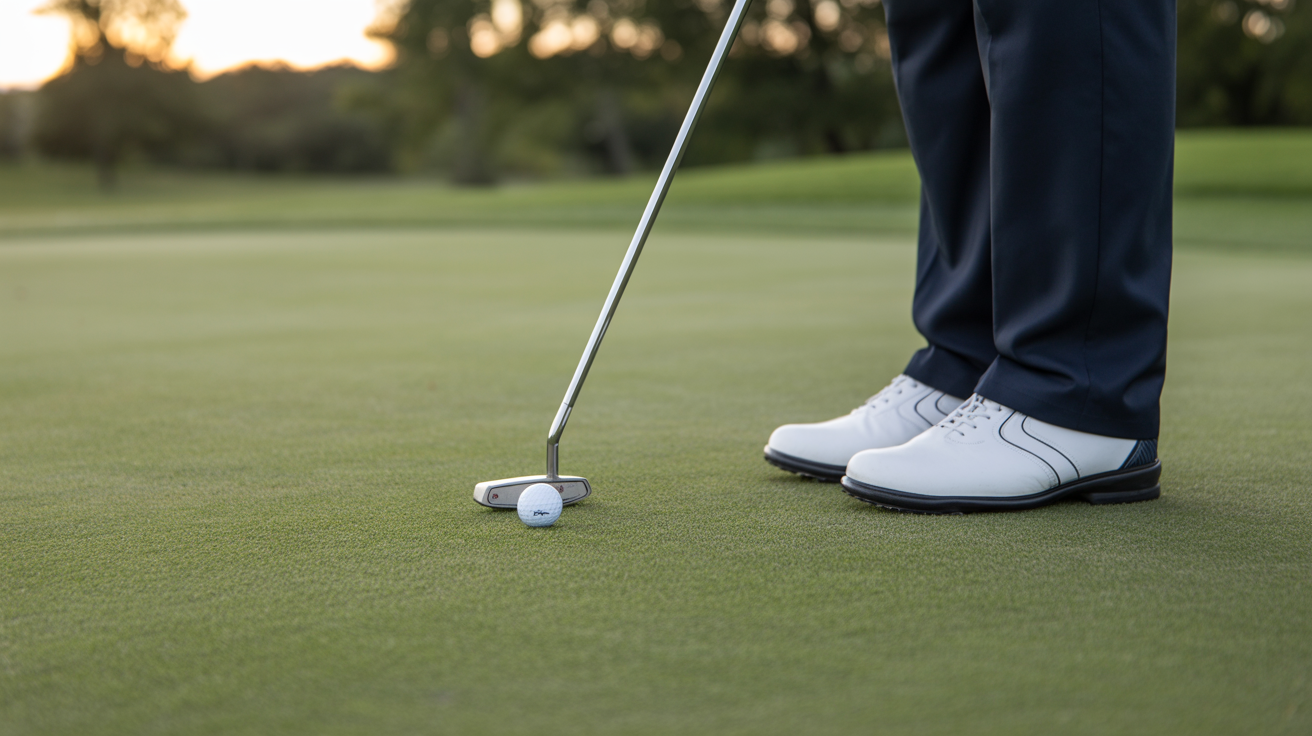
Putting is where rounds are won or lost. The average beginner three-putts constantly, which means most of your strokes aren't happening at full swing, they're happening on the green, five feet from the hole. Fix your putting, and your scorecard improves fast.
Here's what you actually need to know to start rolling the ball better.
Getting your grip and setup right
You don't need a perfect putting grip on day one, but a few basics will keep you from fighting yourself.
Two grips worth knowing
The most common grip is the reverse overlap: place your left index finger over the fingers of your right hand (for right-handers). This locks the hands together and takes the wrists out of the stroke. Many beginners also find the cross-handed grip (left hand low) helpful because it keeps the left wrist from breaking down through impact.
Try both. Use whichever feels more stable and natural.
Stance and posture
- Stand with feet about shoulder-width apart, weight roughly even between both feet
- Bend from the hips until your eyes are directly over the ball or just inside the target line
- Let your arms hang naturally, don't reach for the ball or crowd it
- Position the ball just forward of center in your stance (roughly off your left heel)
Getting your eyes over the ball is the single most useful adjustment most beginners can make. It gives you a truer picture of the target line.
The pendulum stroke
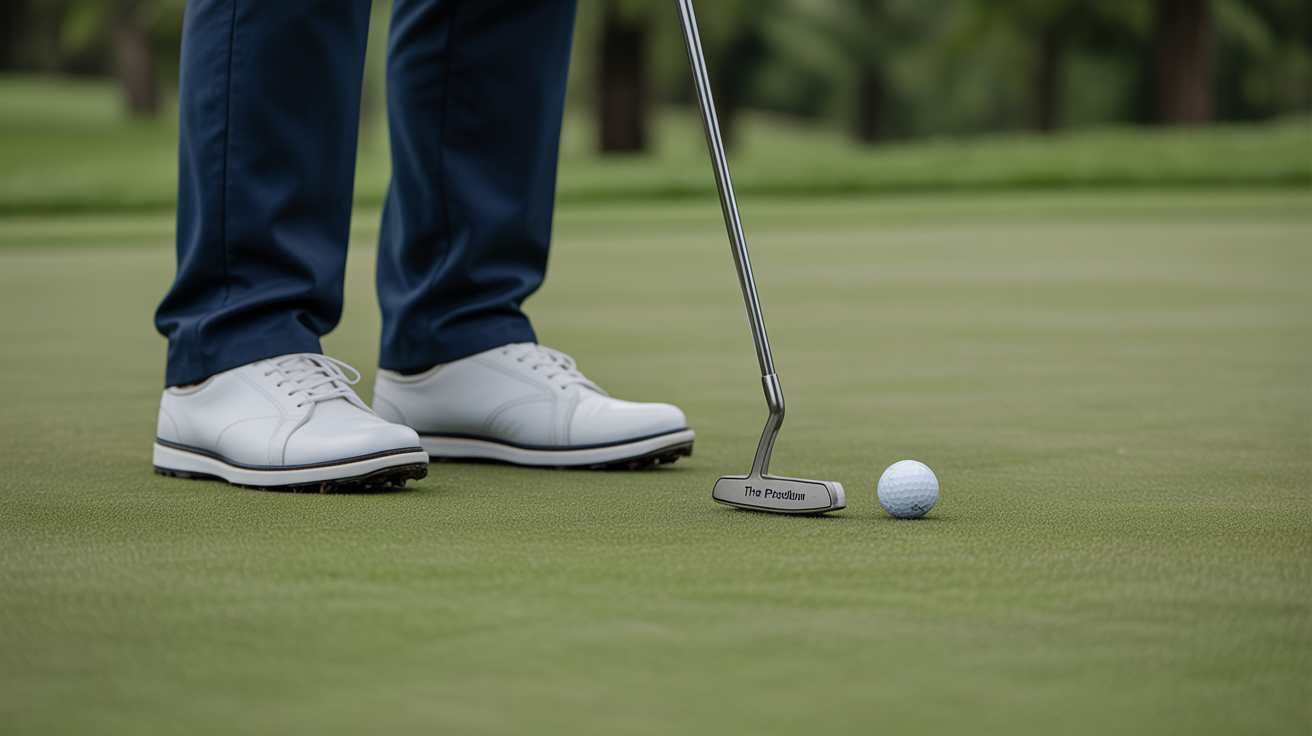
The putting stroke is a pendulum, not a hit. Your shoulders rock gently back and through; your hands and wrists stay quiet throughout. Think of a grandfather clock, the swing is smooth, the tempo is even, and the clubhead travels low to the ground.
What to keep still
Your head is the big one. If you watch the hole when you putt, you'll move your upper body and pull the ball off line. Keep your eyes on the back of the ball until well after impact, you'll hear whether it went in.
Your hips shouldn't move either. The stroke comes entirely from your shoulders and arms.
Follow-through matters
The backswing and follow-through should be roughly equal in length for shorter putts. On a 10-foot putt, you're not taking a huge backstroke, a short, controlled takeaway produces a controlled forward stroke. Match them up and you'll roll the ball more consistently.
Speed control: the thing beginners overlook
Line gets all the attention, but speed is more important. A putt hit at the right pace will always have a chance to go in, even if the line is slightly off. A putt hit too hard or too soft will miss regardless of perfect aim.
The 17-inch rule
A useful benchmark: try to roll every putt so it would stop about 17 inches past the hole if it somehow missed. That pace keeps the ball rolling forward firmly enough to hold its line (a dying putt wanders more at the end), and it means the back of the cup is in play. Pace shorter; the ball won't finish near the hole. Pace longer; you're leaving yourself a nervous come-backer.
Lag putting: two-putting is a win
On longer putts, anything over 25 or 30 feet, your goal should not be to make it. Your goal should be to finish within a three-foot circle around the hole and set up an easy second putt. This is called lag putting. A solid lag putt that leaves you a tap-in is genuinely a success.
A simple drill: scatter five balls around the practice green at 30 feet each. Try to get every one to stop within three feet of the hole. That's the skill that knocks strokes off beginner scorecards.
Reading break and slope
Reading a green means figuring out how the slope will curve your ball's path. A ball rolling on a flat surface goes straight. A ball rolling across a slope will drift toward the low side, that drift is called break.
How to spot the break
Walk the full length of your putt before you set up. Look at the putt from behind the ball and from behind the hole. Notice where the green tilts. Find the lowest point around the hole, the ball will finish nearest to that spot if it has any slope to deal with.
Beginners consistently underread break. Most teaching pros suggest playing more break than your eye tells you, especially on longer putts. If you think it breaks a cup to the left, try aiming two cups left and see what happens.
Grain
Grain is the direction the grass grows. It's most pronounced on Bermuda grass greens common in warmer climates. If you're putting with the grain (the grass leans toward your hole), the ball rolls faster and breaks less. Into the grain, it slows and breaks a bit more.
A simple way to spot grain: look at the edge of the cup from a standing position. The side where the grass looks shiny and bright is the downgrain side. The side that looks dark or rough is into the grain.
Don't overthink grain when you're just starting out. Pay attention to slope first and get a feel for grain over time.
A simple pre-putt routine
Consistency comes from routine. Here's a straightforward sequence to use on every putt:
| Step | What to do |
|---|---|
| 1. Read | Walk the putt, pick your line, find your starting aim point |
| 2. Feel | Take 1-2 practice strokes looking at the hole to dial in speed |
| 3. Set up | Align your putter face to your starting aim point |
| 4. Check | Glance at the hole once to confirm your read |
| 5. Stroke | Eyes on the ball, trust the read, smooth tempo |
The whole routine takes 20-30 seconds. Having one is more important than the specific steps, it gives you something to fall back on when nerves kick in.
Once you've developed a consistent putting stroke, you'll find that your short-game shots from just off the green matter a lot too. Check out how to chip a golf ball as a beginner for techniques that give you more makeable first putts, and how to pitch the ball for distance control around the green when you need more height and carry.
Common beginner mistakes
Decelerating through impact. This is the most common cause of missed short putts. Beginners fear hitting it too hard and slow down before the ball. The fix: commit to the stroke. A firm, accelerating strike is more reliable than a tentative one.
Looking up too early. The urge to watch the ball go in is natural but costly. Stay down and keep your eyes on the spot where the ball was until you hear (or don't hear) the cup.
Ignoring the practice green. You probably spend 20 minutes on the range before a round. Spend 10 of those minutes on the practice green instead. Stroke some lag putts, make a few 3-footers, and your confidence on the course goes up considerably.
Overthinking the line. Pick your line, commit, and stroke it. The more you stare and second-guess, the more tension creeps into your hands and the worse the stroke gets.
Frequently asked questions
How do I know which way a putt will break?
Walk the length of your putt and look from two angles: behind the ball toward the hole, and behind the hole toward the ball. Find the lowest point around the hole, the ball curves toward it. When in doubt, play more break than you think you need; most beginners underread slope.
What's the best putting grip for a beginner?
Either the reverse overlap or the cross-handed (left-hand-low) grip works well. The cross-handed grip in particular helps beginners keep the left wrist from collapsing through impact, which is one of the most common causes of pushes and pulls.
How far back should I take the putter?
Match the length of your backstroke to the length of your follow-through, and let distance dictate the total size of the stroke. A 6-foot putt needs a much shorter stroke than a 40-footer. Practice strokes while looking at the hole help you feel the right amount of swing for the distance.
Why do I keep three-putting?
Usually it's a speed problem, not a line problem. If your first putt is consistently 8-10 feet short or long of the hole, you'll always be leaving yourself a stressful second. Focus on lag putting, try to finish within arm's length of the hole rather than trying to make every long putt. Two putts from 40 feet is a realistic goal; one putt is a bonus.
Should I use a long putter or a standard putter?
Start with a standard-length putter (33-35 inches, depending on your height). Get the fundamentals down with a conventional stroke first. Other putter styles can help specific issues, but learning on a standard putter gives you a useful baseline and lets you work with an instructor more easily.
The Fairway Primer is an independent beginner's resource and is not affiliated with, endorsed by, or sponsored by any equipment brand, golf course, or governing body. Golf involves swinging clubs outdoors, warm up sensibly, stay aware of others on the course, and consider working with a PGA professional for hands-on putting instruction.