How to Choose the Right Tee Box for Your Skill Level as a Beginner
Which tee box should a beginner play? Learn what golf tee colors mean, how to match yardage to your drive distance, and why forward tees speed up play.
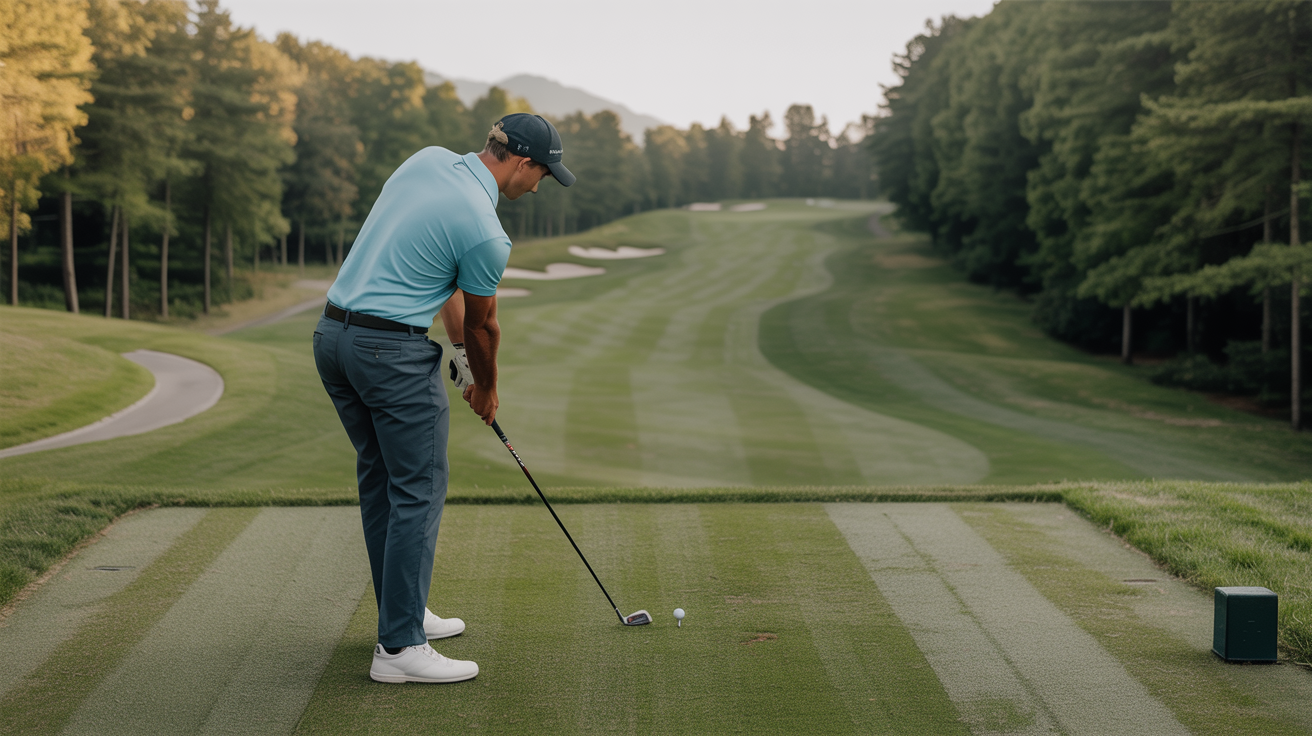
You walk up to the first tee, and there are three or four sets of markers scattered across the box, each one a different color and sitting at a different spot on the fairway. Nobody hands you an instruction manual. If you're wondering which tee box should I play, the short answer is: probably the one that feels a little too short, not the one that looks the most impressive. Picking the right tees is one of the fastest ways to make a round of golf actually enjoyable instead of a slog of forced carries and three-putts from 40 feet away.
This isn't about ability in some abstract sense. It's about matching the length of the course to the length of your shots, so the holes play the way they're designed to. A 400-yard par 4 is a very different hole for someone who hits a 200-yard drive than for someone who hits 260. Choosing tees well is course management before you've even swung a club.
What the Tee Box Colors Actually Mean
Most courses use color to sort tee boxes by distance, though the exact colors vary from course to course and there's no single universal standard. What you'll typically find:
- Forward tees (often red, gold, or sometimes green): the shortest set, historically marketed toward juniors and higher-handicap players.
- Middle tees (often white or sometimes blue): a mid-length set, frequently the default for casual weekend rounds.
- Back tees (often blue or black): the longest set, meant for low-handicap players, competitive events, and scratch golfers.
- Combo or "member" tees: a growing number of courses now offer a blended set, mixing forward and middle markers on different holes for a total yardage between the two.
The names on the markers don't matter nearly as much as the yardage printed on the scorecard next to them. A course with red tees at 5,400 yards and a course with red tees at 6,000 yards are not the same challenge, even though the color matches. Always check the scorecard's total yardage for each set before you assume anything based on color alone.
If you're brand new to the game entirely, it's worth reading through a broader getting started guide first, since tee selection is just one piece of a first-round game plan that also includes what to bring, how to dress, and what pace of play looks like.
The Ego Hurdle: Why Forward Tees Are a Smart Choice, Not a Cop-Out
Here's the part that trips up almost every new golfer: playing the forward tees feels like admitting defeat. It isn't. Tee selection is a practical decision about matching your shot distances to the hole lengths, the same way a runner picks a 5K instead of a marathon on their first race. Nobody questions that choice as a character flaw.
Playing tees that are too long for your actual drive distance creates a cascade of problems. Par 4s turn into three-shot holes you can't reach in regulation. Water hazards and bunkers placed to catch a 230-yard drive suddenly sit right in the landing zone for a 170-yard drive. Forced carries that a longer hitter clears easily become genuine hazards for a shorter hitter. None of that makes the round more fun. It just makes it longer, slower, and more frustrating.
Some of the most enjoyable rounds happen on tees that let a beginner hit a mid-iron or even a hybrid into most greens, rather than a fairway wood on every hole. Reaching greens in something close to regulation means more putts for par and a much better sense of how the game is actually supposed to flow. If you want a fuller sense of what those numbers mean once you're posting them, the guide on scoring basics like par, birdies, and bogeys is a good next stop.
Matching Your Driving Distance to a Tee
A simple way to think about tee selection is to start from your average drive distance on a good, well-struck shot (not your best-ever bomb, and not a mis-hit) and work outward from there. The table below gives rough, commonly cited ranges. Treat it as a starting point, not a rule carved in stone, since course layout, forced carries, and how many hazards line the fairways all shift the picture.
| Average Drive Distance | Typical Tee Recommendation | Approximate Total Course Yardage |
|---|---|---|
| Under 150 yards | Forward tees | 4,200 to 5,000 yards |
| 150 to 180 yards | Forward to middle tees | 5,000 to 5,600 yards |
| 180 to 220 yards | Middle tees | 5,600 to 6,200 yards |
| 220 to 250 yards | Middle to back tees | 6,200 to 6,700 yards |
| Over 250 yards | Back tees | 6,700 yards and beyond |
If you don't know your average drive distance yet, that's normal for a beginner. Start one set forward of where your gut says you belong, play a few rounds, and adjust once you have real data from your own scorecards. Most golfers tend to overestimate how far they actually hit the ball.
Why Course Rating and Slope Matter More Than the Yardage Alone
Total yardage tells you how far you'll be walking and swinging, but not how hard the course plays relative to that distance. That's what course rating and slope rating are for, and you'll usually find both printed on the scorecard next to each tee's yardage.
Course rating is roughly the expected score a scratch golfer would shoot from that tee, expressed as a number close to par. Slope rating measures how much harder the course plays for a bogey golfer versus a scratch golfer, on a scale that typically runs from around 55 to 155, with 113 as the average.
For a beginner, the practical takeaway is this: two tee sets with similar total yardage can play very differently if their slope ratings are far apart. A shorter course with a high slope might squeeze fairways with trees and bunkers or add several forced carries over water. A longer course with a lower slope might play wide open with generous fairways and few penalties for a shot that drifts. If you have a choice between two tee sets close in yardage, leaning toward the lower slope is usually the more forgiving pick while you're still building consistency. Once you're tracking rounds, the piece on keeping score and understanding a handicap walks through how course rating and slope actually get used in that calculation.
How the Right Tee Speeds Up Pace of Play for Everyone
Tee selection isn't purely a personal comfort decision. It affects everyone playing behind you. A group hitting from tees that are too long for their average distances will hit more shots per hole, search for more lost balls, take more time to reach greens, and generally slow down the whole course. Multiply that by four players in a group and by every group behind them, and a tee-selection mismatch can add real minutes to a Saturday afternoon for a lot of people.
Playing a tee that matches your actual distances tends to produce a round that moves at a normal pace, with a reasonable number of shots per hole and greens reached in a stroke count that keeps the group moving. Course management on the whole, not just tee choice, plays into this too. The guide on course management strategy for lower scores covers club selection, aiming points, and shot planning that pair naturally with picking the right set of tees. Most regular golfers, including plenty of low-handicap players, would rather play behind a group moving at a good pace from forward tees than a group struggling through triple bogeys from tees too long for them.
Frequently Asked Questions
Is it okay for a beginner to play the shortest tees available?
Yes. There's no rule, formal or informal, against playing the forward tees regardless of age or gender. Many public courses see golfers of all backgrounds choose forward tees specifically because it produces a more enjoyable, faster-moving round.
Do tee box colors mean the same thing at every course?
No. Color conventions vary by course and by region, and a growing number of courses have moved to naming tees by yardage or by a descriptive label instead of color alone. Always check the scorecard's yardage number for each set rather than assuming based on color.
How do I find out my average drive distance if I've never tracked it?
Play a few rounds or range sessions and pace off or use a rangefinder on your well-struck drives, then take a rough average, ignoring your longest outlier and your worst mis-hits. If you don't have that data yet, start one tee set shorter than you think you need and adjust from there.
Should men and women always play different tee sets?
Not necessarily. Tee choice should follow driving distance and comfort with the course length, not gender. Plenty of courses see mixed groups all playing the same tees, or playing different tees based on each individual's actual distances rather than any fixed pairing by gender.
Will playing forward tees make my scores meaningless?
Not at all, as long as you're consistent about which tees you use when comparing rounds to each other. Scores are always tied to the specific tee and course rating they were shot from, which is exactly why handicap systems use course rating and slope to make fair comparisons across different tee sets.