Golf for Complete Beginners: How to Get Started
Learn how to start playing golf from scratch: gear, rules, first swings, and what to expect on your first round.
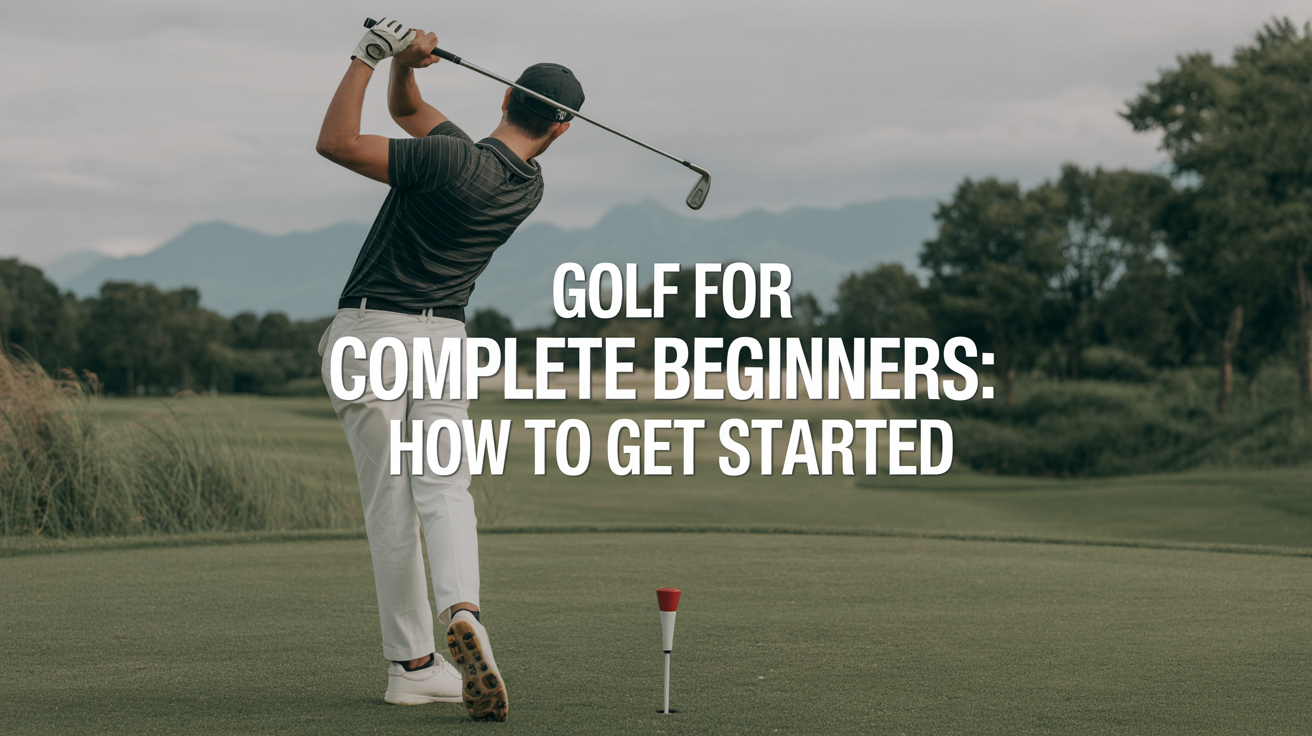
Golf looks complicated from the outside. Clubs everywhere, strange scoring words, unwritten etiquette rules nobody explains. But the basics are genuinely simple, and you can go from zero to walking a real course faster than most people think.
Here's how to start playing golf without wasting money, time, or patience.
At a Glance
- You need four clubs to start (driver, 7-iron, pitching wedge, putter), not the full 14, and a used starter set runs $50-$150.
- Spend real practice time on chipping and putting, not just full swings. Most beginners skip it and pay for it on the course.
- Golf has real social customs (etiquette) that matter as much as the rules to the people you're playing with.
- Choose a par-3 or executive course for your first round; it's shorter, faster, and far less intimidating than a full 18.
- One or two lessons with a PGA professional will save you months of practicing bad habits.
- Golf is genuinely good exercise if you walk it, and it's a low-injury way to be active outdoors.
What you actually need to get started
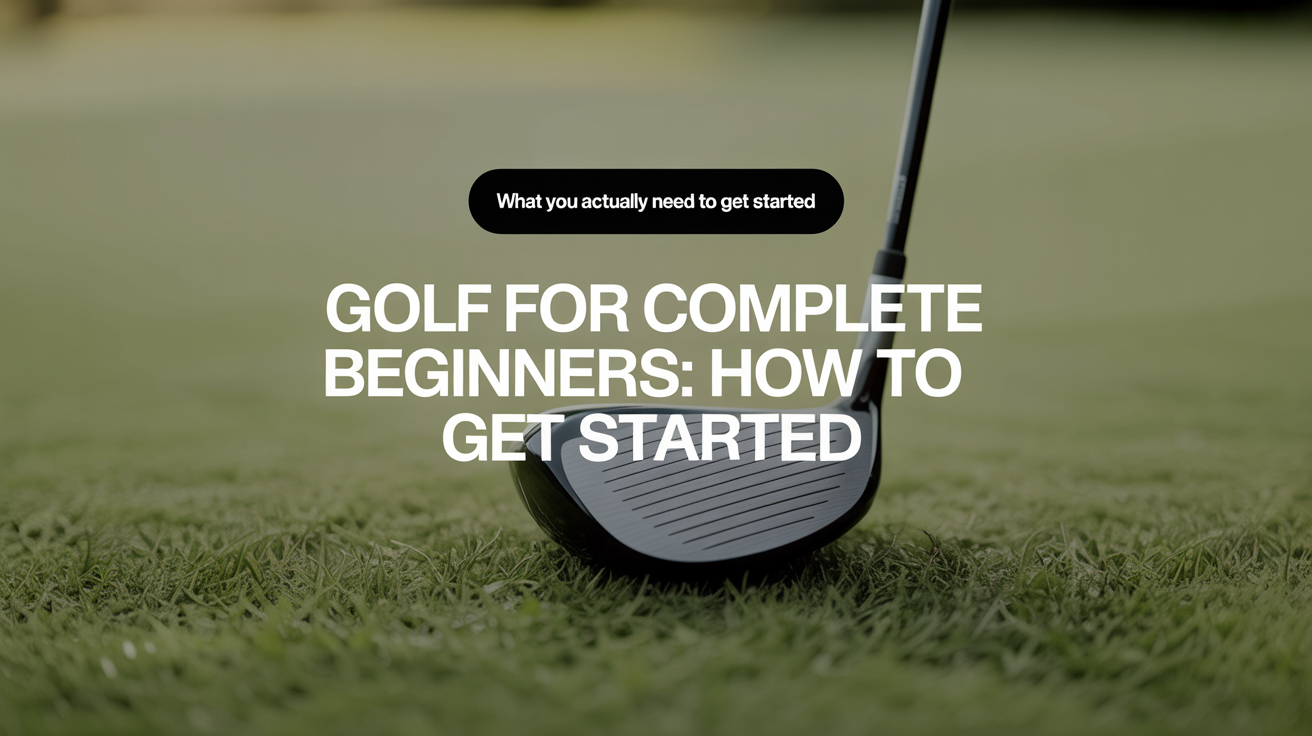
You do not need a full set of 14 clubs on day one. Most beginners do better with fewer clubs anyway, because there's less to think about.
A starter set for most adults includes:
- A driver (the big one for the first shot on long holes)
- A 7-iron (your go-to for learning the swing)
- A pitching wedge (short shots near the green)
- A putter
That's four clubs. You can buy a used beginner set for $50-$150 at most secondhand sporting goods stores or online marketplaces. Avoid buying expensive clubs until you know what you like. Club preferences are personal, and they reveal themselves only after you've played a bit. Before you buy anything used, it's worth spending a few minutes checking grooves, shaft condition, and hosel tightness so you don't get stuck with a club that's cosmetically fine but mechanically compromised.
You'll also need:
- Golf balls (buy the cheap ones for now, because you will lose several)
- Golf shoes or flat-soled sneakers with grip
- A glove for your lead hand (left hand if you're right-handed)
Skip the bag organizers, headcovers, and gadgets until you're sure you're hooked.
What a realistic first-year budget looks like
Costs vary a lot by region and how often you play, but here's a rough breakdown for someone starting from zero:
| Item | Typical cost | Notes |
|---|---|---|
| Used starter set (4 clubs) | $50-$150 | Driver, 7-iron, wedge, putter |
| Balls (dozen, budget) | $15-$25 | Buy two dozen; you will lose some |
| Glove | $10-$20 | One is enough to start |
| Shoes (flat-soled sneakers work) | $0-$60 | Skip dedicated golf shoes at first |
| Bucket of range balls | $8-$15 | Per session, most ranges |
| 9-hole round, public course | $15-$35 | Varies heavily by region |
| Beginner group lesson package (3-4 sessions) | $80-$200 | Optional but recommended |
Add it up and a genuinely functional start to golf, clubs, a few range sessions, and your first couple of rounds, lands well under $300 in most markets. The game gets expensive if you chase new equipment and private lessons, but the entry point is low.
Your first practice session
Before you go anywhere near a real course, spend a few hours at a driving range. Almost every range rents clubs, so you can try before you buy.
Focus on the 7-iron
The 7-iron is the teaching club. It's long enough to cover real distance but forgiving enough to make contact without heroics. Pick one spot on the mat, set up to the ball, and swing slowly.
Here's what good fundamentals look like:
- Grip: Hold the club like you're shaking hands with it, not strangling it. Both thumbs point roughly down the shaft.
- Stance: Feet shoulder-width apart. Ball roughly centered between your feet for irons.
- Posture: Slight bend at the hips, knees soft. You should feel athletic, not stiff.
- Swing: Turn your shoulders back, shift weight forward through the ball. Let the club do the work.
Don't chase distance. Solid contact first, distance later. A ball struck cleanly with a 7-iron will travel 100-130 yards for most adults, and that's plenty. Getting the stance and posture right before you worry about swing mechanics makes everything after it easier, since a poor setup forces compensations later in the swing.
Chipping and putting
Most beginners spend all their range time on full swings and then get to the course and realize half the game is chipping and putting. Don't make that mistake.
Spend at least a third of your practice time on short shots within 30 yards of a target, and another chunk on the putting green (most ranges have a free practice green). Putting is where rounds are won and lost, and it's also the easiest skill to practice without a full swing. Grip pressure, alignment, and a smooth putting stroke can all be groomed just as well on a living room carpet as on a real green, so there's no excuse to skip this between range trips.
Understanding the basics of a round
Golf is played on a course of 9 or 18 holes. Each hole has a tee box (where you start), a fairway (the mowed grass you aim for), rough (longer grass you want to avoid), and a green with a flagstick and cup.
Your goal is to get the ball from the tee box into the cup using as few strokes as possible. The number of strokes the hole is designed for is called par. A par-4 hole means a skilled golfer should need four shots. What par means, and how birdie/bogey scoring works is worth reading before your first round so the scorecard makes sense.
For a full picture of how a round is structured, including the difference between 9 and 18 holes, this breakdown of how a round of golf works will fill in the gaps.
Pace of play matters
One thing courses care deeply about is keeping the game moving. As a beginner, this mostly means:
- Be ready to hit when it's your turn
- If you can't find a ball after a few minutes, drop a new one and move on (take a penalty stroke and keep going)
- Let faster groups play through if you're falling behind
Nobody expects perfection from a beginner. They do expect you not to hold everyone up. A useful benchmark: a nine-hole round should take a group of two roughly 1.5 to 2 hours. If you're consistently running 30-plus minutes over that, it's a sign to speed up your pre-shot routine, not your swing.
Golf etiquette: the unwritten rules
Golf has more social customs than most sports. These aren't optional. They matter to the people you play with and to the course staff.
| Situation | What to do |
|---|---|
| Someone is about to swing | Stand still, stay quiet |
| You take a divot (chunk of turf) | Replace the divot or fill it with sand |
| Your ball makes a dent on the green (a pitch mark) | Repair it with a divot tool |
| You're on the green | Don't step on someone's putting line |
| You finish a hole | Rake the bunker if you played out of one |
| You're driving a cart | Keep it on the path near tees and greens if a "cart path only" sign is posted |
These habits mark you as a considerate golfer, which makes you welcome on any course.
Finding your first golf lesson
You can learn a lot on your own, but one or two lessons with a qualified instructor will save you months of grooving bad habits. A PGA Professional can watch your swing in person and give you feedback no article or video can match. There's a big difference between reading about grip pressure and having someone physically show you what it should feel like.
Most courses offer beginner packages, and many public courses have affordable group lessons. Look for "beginner clinic" or "learn to play" programs. They're typically 3-4 sessions covering grip, stance, swing basics, and short game. Group lessons are cheaper than private ones, often $80-$200 for the full package, and perfectly fine for the first stage of learning.
Also worth knowing: many courses run beginner-friendly programs on weekday mornings, when the course is quieter and staff have more time to be patient. Call ahead and ask what's available. Courses want new golfers, and you'll often find a warmer reception than you expect.
One more thing about lessons: go in with realistic expectations. A single lesson won't fix everything, but it gives you one or two specific things to work on, which is far more useful than practising a swing you've made up on your own.
Playing your first real round
Choose a par-3 course or an executive course (shorter holes, mostly par 3s and 4s) for your first round. These are faster to play and less intimidating than a full 18-hole championship layout. A busy Saturday morning on a championship course is not the place to take your first swings in front of strangers.
A few things to expect:
- It will take longer than you think. Budget 2-3 hours for 9 holes as a beginner.
- You will hit some terrible shots. That is completely normal, and experienced golfers know it the moment they see you on the tee.
- The scorecard doesn't have to be official. Pick up your ball after 8 strokes on a hole and move on. This is called "picking up" and most beginner golfers do it routinely until they get more consistent.
- Bring water. Golf in warm weather over several hours is physical exercise, even if it doesn't always feel that way when you're riding a cart.
- Warm up before you play. Five minutes of gentle arm circles and a few easy practice swings loosens you up and reduces the chance of a sore back by the end of round.
Before you go, get familiar with common golf terms you'll hear on the course so you're not guessing when someone mentions a "mulligan" or "playing from the tips."
Golf is better exercise than most people expect
If you walk instead of riding a cart, golf adds up to real activity. A controlled trial that tracked sedentary middle-aged men playing golf on a walking basis two to three times a week for 20 weeks found meaningful improvements in aerobic capacity and trunk muscle endurance, along with reductions in weight and waist circumference, and reported it as a practical, low-injury way to be active. You don't need to walk every round to benefit, but it's worth considering if fitness is part of why you're taking up the game.
Safety on the course
Golf clubs are heavy and swings are fast. A few basics:
- Always check that nobody is standing nearby before you swing
- Shout "fore!" loudly if your ball is heading toward other golfers
- On the course, stay clear of anyone else who's about to hit
- Lightning: if you see a storm approaching, get off the course
Lightning deserves extra attention because a golf course is close to the worst possible place to be caught in one: open, elevated, dotted with tall lone trees, and full of metal clubs. Federal guidance on lightning safety for outdoor sports recommends stopping activity immediately at the first sound of thunder or sight of lightning, since thunder can be heard from roughly 10 miles away, and waiting at least 30 minutes after the last thunderclap before heading back out. Most clubs have a siren system for exactly this. If it sounds, leave right away. Don't wait to finish the hole.
These aren't things to be anxious about. Just keep them in the back of your mind the same way you'd think about safety in any outdoor sport.
Frequently asked questions
How long does it take to get decent at golf?
Most people can play a casual round without embarrassing themselves after 5-10 hours of practice and one or two lessons. Getting genuinely good takes years, but "good enough to enjoy a round" is achievable in a few weeks if you practice with purpose.
Is golf expensive to get into?
It doesn't have to be. A used starter set, a few buckets of range balls, and a round on a public course can cost well under $300 for your entire first year, clubs included. The game gets expensive if you let it, chasing new drivers and private coaching, but the entry point is genuinely low.
Do I need to know all the rules before I play?
No. Learn the basics: play the ball where it lies, count every stroke, and don't move the ball without a good reason. The full rulebook is enormous, but casual golf doesn't require knowing all of it. You'll learn the rest as you go.
What's the best club to practice with first?
The 7-iron. It's the most versatile teaching tool in the bag. Once your swing feels consistent with a 7-iron, everything else gets easier to learn.
Can adults learn golf from scratch?
Absolutely. The majority of people who take up golf do so as adults. It takes longer to build muscle memory as an adult than as a child, but adults learn faster in some ways because they follow instructions better and practice more deliberately. Age is not a barrier.
Should I walk or ride a cart as a beginner?
Either is fine for your first rounds, but walking when your body allows it does double as light exercise and gives you more time between shots to reset mentally. If you're worried about pace of play while you're still learning the game, riding can help you keep up early on. There's no rule against switching depending on how you feel that day.
What if I don't know anyone to play with?
Most public courses will pair you with other golfers or small groups, especially on weekday tee times. This is completely normal and a good way to meet other beginners or more experienced players who don't mind a slower group. If the idea makes you nervous, a beginner clinic or group lesson is a lower-pressure way to meet people before you tee off with strangers.