Driving Range 101: How to Practice at the Range
Learn how to use a driving range as a beginner: buying a bucket, picking a bay, range etiquette, and what to actually practice.
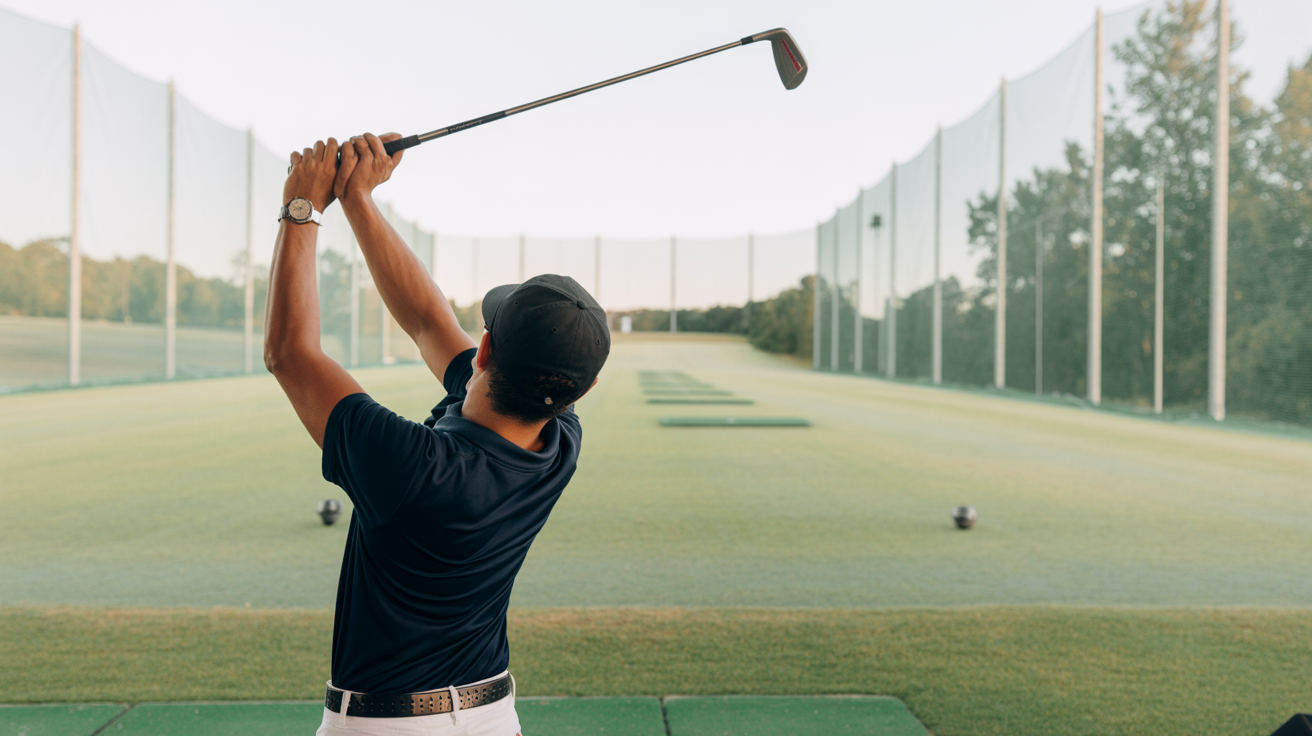
What the driving range actually is
The range is your practice facility. You buy a bucket of balls, set up at a bay, and hit toward targets in the distance. No greens to find, no tee times to chase, no pressure from a foursome behind you. For most beginners, it's the best place to start before ever setting foot on an actual course.
If you're still figuring out what the game even looks like from the ground level, the beginner's overview of how golf works is worth a quick read before your first range visit.
How a driving range works
Buying a bucket
Walk into the pro shop or the main building and ask for a bucket. Small buckets run about 30 to 50 balls; large buckets can top 100. Start small on your first visit. You'll swing more than you expect trying to get the feel of the club, and fatigue sets in faster than it looks.
Some ranges are automated: you pay at a kiosk, get a card, and load it into a ball dispenser at your bay. Others have staff behind a counter. Either way, it's a pretty casual transaction.
The bays and how to pick one
Most ranges have a row of stations along a concrete or turf mat platform. Each station is a "bay." Pick one that isn't right next to someone already mid-swing. Give yourself a little room on both sides, both out of courtesy and because it's easier to focus when you're not watching someone else's swing.
Some ranges have a second-story deck. The hitting surface is the same, but the view is better. First-timers usually do fine on the ground level.
Grass tees vs. mats
Higher-end ranges give you a patch of real turf to hit off. Most use rubber mats. Mats are fine for learning, but know this: a mat forgives mistakes that real turf won't. If you hit slightly behind the ball (called a "fat" shot), a mat will still let the club slide through. On grass, that same swing digs into the ground and goes nowhere. Don't get too attached to mat feedback as the truth about your swing.
Range etiquette and safety
The range has unwritten rules, same as the course. None of them are hard.
- Stay in your bay. Don't wander into the next person's space to retrieve a club or a dropped ball.
- Don't yell or distract. People are concentrating. Keep the energy low.
- Don't run onto the range floor. The hitting area is for balls in flight. The range staff retrieve balls with machines; you don't go out there.
- Aim toward the targets. This sounds obvious, but beginners sometimes let a swing drift sideways. Be aware of where the ball is actually going, not just where you meant to aim.
- Give walkers space. If your range has people walking past behind the bays, wait until they've cleared before you swing.
One safety note that doesn't get said enough: a golf ball hit off-center can go at strange angles. Know where your shanks are landing, not just your good shots. That's part of staying aware of the people around you.
What to actually practice (instead of just bashing driver)
This is where most beginners go wrong. You arrive, pull out the driver, and swing as hard as you can for an hour. By the end you're exhausted, nothing improved, and you're not sure why.
Here's a more useful approach.
Start with a short iron. A 9-iron or pitching wedge. These clubs are shorter and easier to control, so you can actually feel what's happening. Spend the first 10 to 15 balls getting loose with something manageable.
Don't skip the short game. Most ranges have a chipping area or a putting green alongside the main bays. Chip and putt shots account for roughly half of the strokes a beginner takes in a round. Spending 20 minutes on a wedge around the chipping green will drop your score faster than hitting driver all session.
Work your way up the bag. Once you're warmed up and hitting the 9-iron with some consistency, move to a 7-iron, then maybe a 5-iron or hybrid. Save the driver for the last 10 or 15 balls when your timing is actually working.
Pick a target. Almost every range has flags or yardage markers in the distance. Aim at one of them. It sounds simple, but randomly bashing balls without aiming is surprisingly common and doesn't build anything useful.
For a quick reference on what clubs do what, the golf terms glossary covers the basics without turning into a textbook.
A sample beginner range session
This is a loose template, not a strict program. Adjust based on how many balls you bought and how your swing feels on a given day.
| Segment | Clubs | Balls | Goal |
|---|---|---|---|
| Warm-up | 9-iron or PW | 10 | Loosen up, find contact |
| Short irons | 9-iron, 8-iron | 10-15 | Consistent contact, pick a target |
| Mid irons | 7-iron, 6-iron | 10-15 | Controlled swings, not power |
| Long irons or hybrid | 5-iron or hybrid | 8-10 | Get comfortable, forgive mishits |
| Driver | Driver | 8-10 | Finish with what you've been wanting to hit |
| Chipping area | Wedge | Any | 15-20 min on short shots around the flag |
Total: roughly a medium bucket, 50 to 60 balls, plus time on the chipping green. A good first session takes 60 to 90 minutes. Don't rush it, and don't feel like you need to burn through every ball as fast as possible.
Outdoor ranges vs. indoor simulators
Traditional outdoor ranges are open-air, usually with some kind of overhead cover for the bays. You hit real balls into real distance. This is closer to the actual experience of playing.
Indoor simulators have become a real option in the last few years. You hit into a screen, sensors track the ball, and a virtual course or range appears. They're useful in bad weather and genuinely good for getting feedback on ball speed, launch angle, and where the ball would have landed. The downside is cost (usually charged by the hour, and rates can be high) and the fact that the feel is slightly different from hitting real balls outdoors.
For a beginner who just wants to hit balls and get comfortable, the outdoor range is the right place to start. Simulators are more interesting once you understand your swing well enough to use the data they give you.
If you're curious about how range practice fits into a full round, how a round of golf works explains the 9-hole and 18-hole formats so you can see where the practice pays off.
Frequently asked questions
How long should a beginner spend at the driving range?
Sixty to ninety minutes is plenty for a first visit. Your swing muscles will tire before you think they will, and tired swings build bad habits. One medium bucket hit thoughtfully is better than two large buckets bashed without purpose.
Do I need my own clubs to use a driving range?
Most ranges rent clubs for a small fee. You don't need to buy a set before you've ever swung a club. Rent a few irons for your first couple of visits to see if the game clicks before spending money on equipment.
What should I wear to the driving range?
Comfortable clothes you can move in, and athletic shoes with a flat sole. You don't need golf shoes at the range, though they help. Avoid sandals or flip-flops because your feet move more than you'd think during a swing. Some ranges have a dress code (no tank tops, collared shirts only), so it's worth checking the facility's website if you're unsure.
Is it okay to go to the range if I've never played golf before?
Yes, absolutely. The range is specifically where you go before you play. Nobody expects a first-timer to show up already knowing how to swing. If you want some basic technique before you go, a quick lesson from a PGA professional is worth the hour. But you can also just show up, start with a 9-iron, and figure things out through reps. Most regulars at the range have been in your shoes.
What's the difference between a "mat" and a "grass tee" at the range?
A mat is a rubber or turf surface that lets the club slide through even on a mis-hit. A grass tee is real turf, the same surface you'd play from on an actual course. Mats are more common because they're durable, but real turf gives you more honest feedback on your ball-striking. If your range offers both, try hitting a few from the grass once you feel comfortable on the mat.