10 Common Beginner Golf Mistakes (and How to Avoid Them)
Spot the beginner golf mistakes that cost you strokes before you even reach the green, and learn simple fixes you can apply right away.
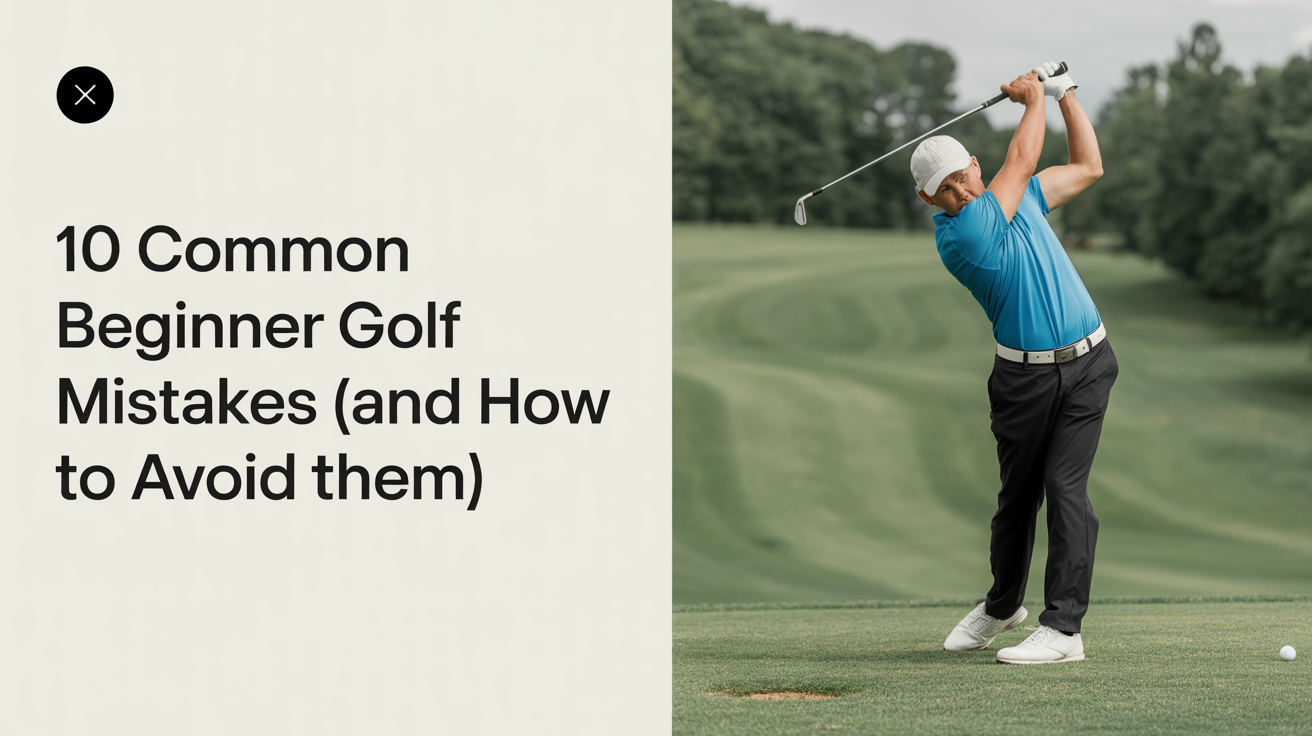
Most new golfers share the same handful of problems. A grip that fights the club, a setup that shifts with every shot, a swing that lunges at the ball. The good news is that none of these are permanent. Once you can name the mistake, fixing it is mostly a matter of repetition.
Here are ten beginner golf mistakes that show up on driving ranges and first-round scorecards everywhere, along with honest, practical ways to correct each one.
Grip and Setup Errors
The grip and setup happen before the ball moves, which is exactly why they matter so much. A small error here travels all the way through the swing.
Holding the Club Too Tight
A white-knuckle grip feels powerful. In practice, it locks up your wrists and forearms, killing any chance of a fluid release through impact. The club head slows down just when it should be speeding up.
Try this instead: grip the club firmly enough that it won't fly out of your hands, but loose enough that someone could tug it away with moderate effort. Some instructors suggest a pressure scale of 1 to 10, aiming for around a 5. Your forearms should feel relaxed through the entire swing.
Standing Too Far From the Ball (or Too Close)
Distance from the ball affects your posture, your swing path, and where the club makes contact. Too far and you reach for the ball, tipping forward. Too close and your arms crowd your body, forcing a steep, choppy swing.
A simple check: at address, let your arms hang naturally. There should be about a hand's width of space between the butt of the club and your thighs. Your knees are slightly bent, your hips hinge forward, and your back is relatively straight, not rounded.
Aiming at the Target Without Aligning Your Body
Most beginners aim the clubface at the target, then align their shoulders, hips, and feet to the target as well. That actually points everything to the right of where you want to go (for a right-handed golfer).
The fix is a concept called parallel left alignment. Your feet, knees, hips, and shoulders should all run on a line parallel to your target line, not directly at it. Lay two clubs on the ground during practice, one pointing at the target and one along your toes. The visual makes the concept click immediately.
Swing Mistakes
Lifting Your Head Before Impact
"Keep your eye on the ball" is one of the oldest pieces of golf advice because lifting your head early is one of the most persistent beginner habits. The moment you look up to see where the ball goes, your entire upper body rotates and rises, and the club often catches the top of the ball for a thin, low shot.
A practical remedy: after impact, hold your finish position and allow the ball flight to pull your eyes upward naturally. Your head should stay down long enough that you see the divot (or the spot where the ball sat) before you look up.
Swinging Too Hard
Golf is a game where effort often works against you. A harder swing usually means more tension, which disrupts tempo and timing. You lose control of the club face, and the shot that results is usually shorter and less accurate than a smooth, controlled swing would have been.
Focus on making solid contact rather than hitting the ball hard. A 75 percent effort swing that strikes the center of the club face will almost always travel farther than a 100 percent effort swing that catches the heel or toe.
Swaying Off the Ball
During the backswing, many beginners shift their entire weight to the right (for right-handed golfers) instead of rotating around a stable center. The hips slide laterally rather than turning. On the downswing, this often reverses, causing a reverse pivot where weight stays on the back foot through impact.
Think about rotating your hips and shoulders around a fixed point, like a post running through your spine. Your head should stay roughly in the same position throughout the swing. Even a small amount of lateral sway creates inconsistency that is hard to repeat.
Course and Mental Mistakes
Skipping the Short Game
Beginners often spend the bulk of their practice time on the driving range hitting full shots. But a large portion of strokes in any round happen within 100 yards of the green. Chips, pitches, and putts determine your score more than your driver does.
Spend real time practicing short shots. A consistent chipping technique and a reliable putting stroke will lower your scores faster than extra distance off the tee. See our guide on getting started in golf for how to structure early practice sessions.
Playing the Wrong Tees
Many beginners step up to the back tees because that is where they see experienced golfers play. The result is a long, frustrating round that strains pace of play and makes the game feel impossibly hard.
Most courses have tee boxes specifically designed for newer players. Playing from tees that match your ability turns the round into a genuine learning experience instead of a grind. There is no ego involved in choosing the right starting point.
Ignoring Basic Etiquette
Golf has a set of unwritten rules around pace of play, noise, and care for the course that every beginner should pick up early. Raking bunkers, replacing divots, not talking during another player's swing, and being ready to hit when it is your turn are all part of the game.
Being unaware of these expectations does not just slow things down for other groups. It creates tension in your own group and makes the round less enjoyable for everyone. Familiarize yourself with golf terms every beginner should know so you also understand the language being used around you on the course.
Keeping Score Before You Are Ready
Scorecard pressure is real, and for someone new to the game, obsessing over your score can make the experience feel stressful rather than fun. When you are focused on your number, you stop focusing on the swing, the course, and the process.
Many instructors suggest that beginners spend their first few rounds simply playing the game without recording scores. Focus on making contact, following the rules, and understanding how a round of golf works. The scores will come down naturally as the fundamentals improve.
Quick Reference
| Mistake | Root Cause | Simple Fix |
|---|---|---|
| Grip too tight | Anxiety, overcompensation | Aim for a 5/10 grip pressure |
| Wrong distance from ball | No setup routine | Hand's width between grip and thighs |
| Poor alignment | Aiming directly at target | Use parallel left setup, practice with two clubs |
| Lifting head early | Eagerness to see the shot | Hold finish, let ball flight pull eyes up |
| Swinging too hard | Assuming force equals distance | 75% effort, focus on contact |
| Swaying off the ball | Sliding hips instead of turning | Rotate around a fixed spine, not laterally |
| Neglecting short game | Over-focusing on power | Dedicate half of practice time to chips and putts |
| Wrong tee selection | Ego, unfamiliarity with options | Choose tees appropriate for your current distance |
| Ignoring etiquette | Not knowing the norms | Read up on course etiquette before your first round |
| Tracking score too early | Pressure and perfectionism | Play a few rounds without keeping score |
Frequently Asked Questions
What is the most common mistake beginner golfers make?
Grip pressure is probably the single most common issue. A grip that is too tight creates tension throughout the entire swing chain and prevents the wrists from releasing naturally through impact. It is also one of the easiest things to correct with a bit of focused practice.
How long does it take to fix beginner golf mistakes?
It depends on the mistake and how often you practice. Some setup errors, like alignment and ball position, can improve noticeably within a few sessions once you understand what to look for. Swing mechanics that involve muscle memory take longer, often several weeks of deliberate repetition.
Should I take lessons or fix mistakes on my own?
Both approaches work, but lessons accelerate the process considerably. A qualified PGA professional can spot the root cause of a problem rather than the symptom. Many beginners try to fix the wrong thing because they misdiagnose what is actually going wrong in their swing. The Fairway Primer is an independent educational resource; for hands-on feedback, consult a certified instructor.
Will playing more often fix my mistakes automatically?
Not necessarily. Practicing the same wrong pattern repeatedly reinforces that pattern. If your swing has a fundamental flaw, more repetitions can make it harder to fix, not easier. Deliberate, purposeful practice with specific feedback is more effective than simply logging more rounds.
Is it worth practicing at a driving range as a beginner?
Yes, with an important caveat: spend time on the short game area too, not just the hitting bays. Many ranges have putting greens and chipping areas that beginners ignore. The range lets you work on mechanics without the distraction of course conditions, but balance your time so the short game gets its fair share of attention.